
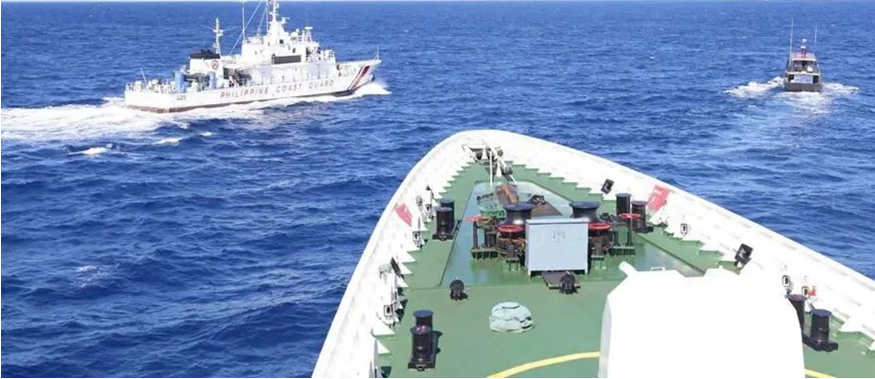

The simmering dispute between China and the Philippines over the latter’s unauthorized transportation of construction materials to Ren’ai Jiao (Ren’ai Reef) has escalated as Western countries, led by the US, express backing for the Philippines. In contrast, China’s measured and legitimate responses have been criticized.
China’s Foreign Ministry, in a second statement within days, called on the Philippines to promptly remove the military vessel stranded at the reef, reiterating that Ren’ai Reef falls within China’s Nansha Islands (Spratly Islands).
Accusing the Philippines of breaking its commitment, China cited the vessel’s 24-year presence and significant repairs aimed at permanently occupying the reef.
China’s Ministry of National Defense, responding to the US Defense Department’s statement, accused the US of unfounded allegations and interference, urging respect for China’s sovereignty and regional stability.
US Defense Department spokesperson Patrick Ryder asserted support for the Philippines’ actions, but China retorted that the US lacks the authority to meddle in the South China Sea.
The China Coast Guard’s (CCG) actions were restrained and professional, using water cannons only after ineffective warnings, averting major clashes.
China emphasized its diplomatic approach and reiterated the Philippines’ obligation to remove the grounded warship, emphasizing the gravity of international law violations.
Despite tensions, China remains open to dialogue, urging the Philippines to address the issue through negotiations.
Experts caution the Philippines against being influenced by Western countries, notably the US, as their interference could complicate the situation.
China’s measured response, focused on dialogue and diplomacy, underscores its commitment to stability and sovereignty in the region.