

An Australian delegation consisting of representatives from various sectors, including government agencies, academia, and media, is gearing up for a highly-anticipated bilateral high-level dialogue with their Chinese counterparts. The dialogue is scheduled to take place on September 7, marking the first such event since early 2020.
This dialogue comes as a significant step toward enhancing bilateral engagement and stabilizing relations between Australia and China, which had deteriorated due to heightened tensions in recent years. The delegation includes former ministers from both major Australian political parties, signaling bipartisan efforts to promote economic and trade relations and foster people-to-people exchanges with China.
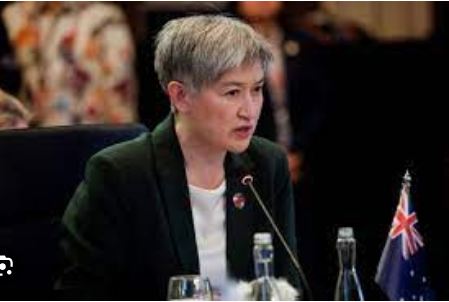
Australian Minister of Foreign Affairs Penny Wong emphasized the importance of this dialogue as a means to increase bilateral engagement and stabilize the relationship with China.
The 7th Australia-China High-Level Dialogue aims to facilitate constructive discussions across various topics, including trade and investment, people-to-people ties, and regional and international security. The dialogue is expected to address misunderstandings and seek common ground between the two countries.
The Australian delegation, led by former Trade Minister Craig Emerson, includes former Minister for Foreign Affairs Julie Bishop, demonstrating cross-party support for the dialogue. On the Chinese side, Li Zhaoxing, China’s former Minister of Foreign Affairs and honorary president of the Chinese People’s Institute of Foreign Affairs, will co-chair and lead the delegation.
The background for this dialogue includes recent high-level political and military contacts between China and the United States, as well as reported plans for US President Joe Biden to meet with Chinese leaders. These developments have prompted Australia to adjust its policies toward China.
While Australia’s bilateral relations with China have shown signs of improvement since the Labor administration took office in May 2022 and China lifted tariffs on Australian barley exports in August, challenges and misunderstandings remain. This dialogue is expected to provide a platform to address contentious issues and find solutions.
Warming economic and trade relations are viewed as a foundation for improving overall China-Australia relations. Access to the Chinese market and opportunities for cooperation in sectors like new energy and new materials are among Australia’s priorities.
Additionally, the visit aims to promote people-to-people exchanges, as the deterioration in relations has led to a decline in Chinese tourists and international students going to Australia, negatively impacting businesses and universities in the country.
In terms of security, Australia seeks to maintain its alignment with the US on issues such as the Taiwan question and South China Sea, highlighting the complexity of its foreign policy.
While Australia has played a crucial role in the US Indo-Pacific Strategy, it also aims to protect its national interests and avoid becoming a mere tool of the US. The future direction of China-Australia ties will depend on the political wisdom and strategic vision of Australian policymakers.
The outcome of this high-level dialogue will be closely watched to assess the prospects of China-Australia relations and their impact on the broader geopolitical landscape in the Indo-Pacific region.