
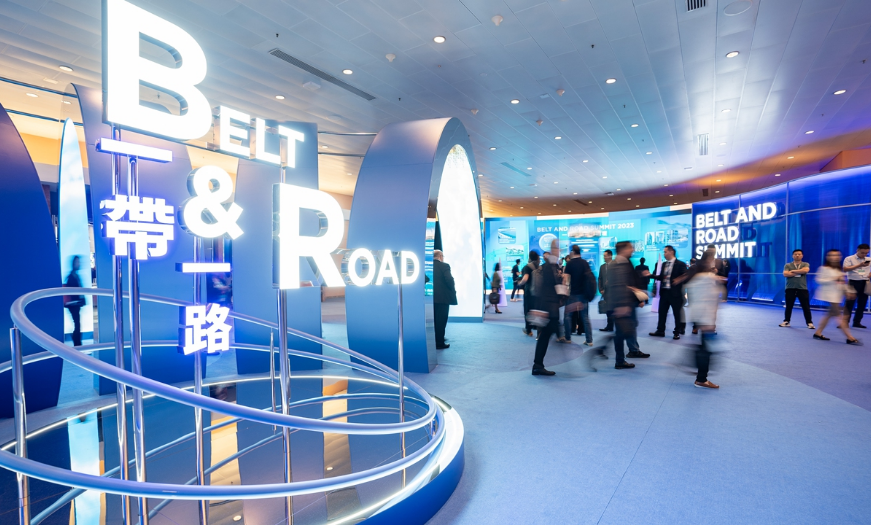

Hong Kong is making a significant comeback on the world stage as it hosts the 8th Belt and Road summit with nearly 6,000 attendees and over 100 delegations from overseas and mainland regions. The event marks the 10th anniversary of the Belt and Road Initiative (BRI) and showcases Hong Kong’s intent to strengthen partnerships with regions including the Middle East and Southeast Asia.
Key points from the article include:
- Hong Kong’s Role in the BRI: Hong Kong, as a key participant, contributor, and beneficiary of the BRI, plays a crucial role as a bridge between mainland China and the global community. It actively expands cooperation with BRI partners in various fields, including trade and investment, technology, and infrastructure development.
- Record-Breaking Summit: The Belt and Road summit attracted almost 6,000 government officials, business leaders, entrepreneurs, and startups from around 70 countries and regions along the BRI. The substantial attendance and numerous Memorandums of Understanding (MOUs) signed demonstrate Hong Kong’s renewed global significance.
- Resilience Against Hostility: Despite facing US-led containment and criticism, Hong Kong is taking proactive steps to strengthen its international position. By actively participating in the BRI and fostering stronger ties with BRI countries, Hong Kong aims to expand its international space and counter external hostility.
- Financial Hub and Integration Hub: Hong Kong, known for its role as a financial, services, trade, information, legal settlement, and shipping hub, can further contribute to the BRI’s development by connecting participating nations and regions. The central government’s support and the “One Country, Two Systems” policy enhance Hong Kong’s status in this regard.
- New Opportunities: The summit explores opportunities for Hong Kong’s post-COVID-19 recovery and its potential to expand economic and trade cooperation with regions such as ASEAN, Central Asia, and the Middle East. The event includes sessions on new investments in the Middle East and financial cooperation.
- Growing Influence in the Middle East: Recent shifts in the global geopolitical landscape have led to increased cooperation between China and Arab countries. Hong Kong sees potential in tapping into the Arab market, enhancing export trade, and advancing its financial and industrial development.
- Youth Engagement: The inclusion of a special session on youth development reflects the importance of the youth in driving the future of BRI development. Hong Kong’s multilingual and international perspectives position its youth as valuable contributors to BRI projects.
- Central Government’s Support: The central government emphasizes Hong Kong’s unique status and advantages, emphasizing the preservation of its common law system and maintaining smooth international connections. This support underscores Hong Kong’s role in the BRI’s success.
- US and the BRI: Despite criticism and interference from the US, the Belt and Road Initiative has brought development opportunities to the world. Zheng Yanxiong, head of the central government’s liaison office in Hong Kong, noted that even the US has benefited from China’s historical maritime silk road.
In conclusion, the Belt and Road summit highlights Hong Kong’s resurgence as a global hub for cooperation, trade, and connectivity, reaffirming its pivotal role in the Belt and Road Initiative’s success. Despite external challenges, Hong Kong is determined to strengthen its international position and foster closer ties with BRI countries and regions.