
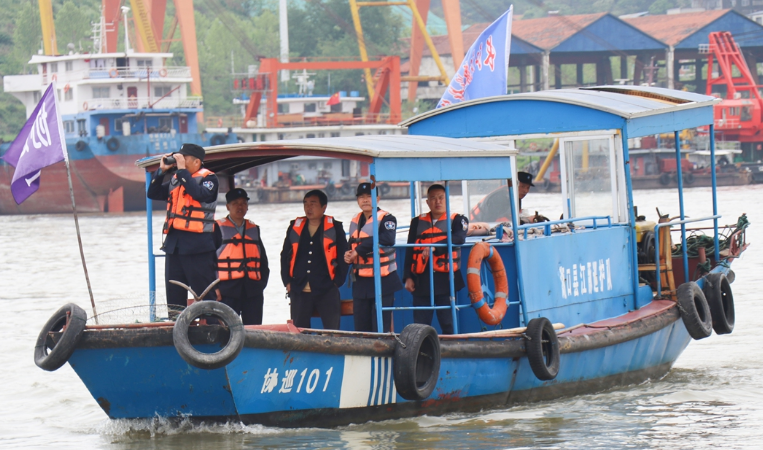

For the past five years, Liu Chenglin, a 56-year-old Yangtze River patrol officer, has proudly showcased two endearing photos of Yangtze finless porpoises as his WeChat profile picture. Captured during a patrol training session in 2019, these images symbolize Liu’s unwavering commitment to the protection of these aquatic creatures.
Liu’s connection with the Yangtze finless porpoises dates back to his childhood when he used to fish with his father in the Yangtze River. However, over time, dwindling fish populations led to the gradual disappearance of the finless porpoises. By 2010, relying solely on fishing for a livelihood became challenging.
Recognized as a nationally protected species, the Yangtze finless porpoise became emblematic of the ecological status of the Yangtze River. Severe environmental damage, largely due to overfishing and human activities, led to a sharp decline in their population. In 2018, reports indicated only about 1,012 finless porpoises remaining in the Yangtze River.
Amid the dire situation, positive changes are now evident. Liu, witnessing the return of finless porpoises, exclaims joyfully as they ride the waves alongside his boat, reminiscent of his childhood experiences. Today, their numbers are increasing.
On January 1, 2018, Yichang Chinese Sturgeon Protection Zone implemented a comprehensive fishing ban, marking a pivotal step in conservation efforts. Subsequently, in June of the same year, an assistance patrol team, including Liu, was established to enforce the ban and safeguard the Yangtze River ecosystem.
Initially, encountering resistance from fishermen engaged in illegal practices, the patrol team faced verbal abuse and physical confrontations. However, with determination and unity, they persevered. The team’s efforts intensified with the official commencement of a decade-long fishing ban on January 1, 2021.
As the Yangtze River conservation initiative gained momentum, awareness among fishermen increased. Liu noted a positive shift, with fishermen voluntarily promoting the fishing ban online. The once challenging task became more manageable and enjoyable for the patrol team.
The liveability of the Yangtze River for the finless porpoises has seen a positive trend. The latest statistics from the Ministry of Agriculture and Rural Affairs reveal over 700 assisting patrol teams and 25,000 assisting patrol officers working across the entire Yangtze River Basin.
Reflecting on their role, Liu expressed confidence in the mission to protect the Yangtze River, emphasizing the vision for a future where the river’s mountains are greener, waters more beautiful, and harmony prevails between people and nature.
In another part of China, the Yangtze finless porpoise has found an unlikely ally in Jiang Meng, the secretary-general of the Nanjing Finless Porpoise and Aquatic Life Conservation Association (NFPALCA). Jiang’s daily walks along the Yangtze River have become a cherished routine, especially during autumn and winter, ideal seasons for observing these porpoises.
Driven by a sense of responsibility, Jiang initiated the “Yangtze Finless Porpoise Diary” on WeChat in December 2023, sharing daily encounters with these “smiling angels.” His fascination with their naturally upturned mouths, creating a healing smile, has resonated with netizens, turning the finless porpoises into internet celebrities.
The “Finding Smiles in the Yangtze River” live broadcast in September 2023 drew nearly 50,000 netizens nationwide. Engaging discussions on the differences between Yangtze finless porpoises and dolphins became a testament to growing public interest.
Jiang’s association, comprising nearly 30 staff members, collaborates with local departments to promote Yangtze finless porpoise culture. With the population in Nanjing showing stability and an increasing trend, the association aims to maximize the ecological and cultural value of the finless porpoise.
China’s commitment to ecological and environmental protection, exemplified by the stories of Liu Chenglin and Jiang Meng, underscores the transformative impact of conservation initiatives. As fishermen become protectors and individuals like Jiang dedicate themselves to advocacy, the Chinese path to harmonizing humanity with nature serves as a global model for sustainable development and environmental protection.