
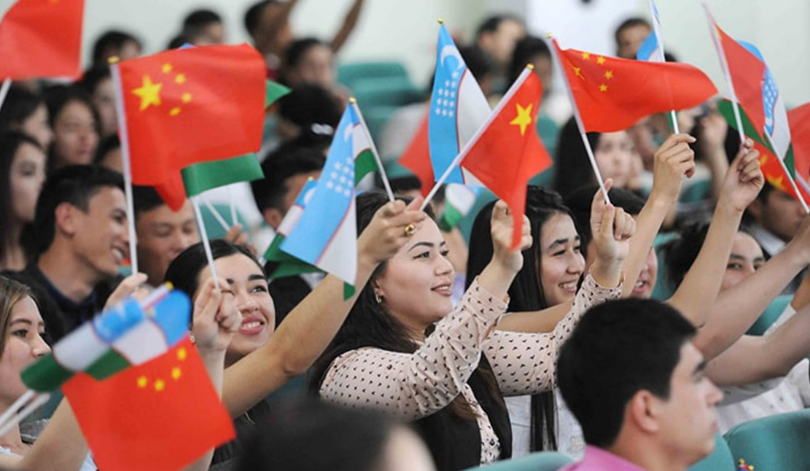

China and Uzbekistan upgraded their bilateral ties to an all-weather comprehensive strategic partnership during talks between Chinese President Xi Jinping and Uzbek President Shavkat Mirziyoyev in Beijing. The elevation of diplomatic relations signifies a new era in China-Uzbekistan cooperation, with increased collaboration expected in both traditional and emerging sectors.
President Xi emphasized the deep-rooted friendship between the two nations, rooted in the spirit of the Silk Road. The establishment of an all-weather comprehensive strategic partnership aims to build a solid foundation for a shared future between China and Uzbekistan. The Belt and Road Initiative (BRI) will play a crucial role in fostering this relationship.
Xi highlighted the importance of treating each other with sincerity and trust, especially in the face of the complex international situation. China pledged firm support for Uzbekistan’s national sovereignty, independence, and territorial integrity. Mirziyoyev expressed hopes for strengthened mutual trust and expanded cooperation across various fields, aiming for fruitful results in areas such as economy, trade, agriculture, green energy, local development, tourism, and people-to-people exchanges.
The move to deepen ties follows Mirziyoyev’s visit to China after the China-Central Asia Summit last year. It underscores the significance Uzbekistan places on its relationship with China, as noted by experts. The nations are expected to enhance cooperation on projects like the China-Kyrgyzstan-Uzbekistan railway, reflecting the broader potential for collaboration. As Central Asian countries undergo an energy transformation, there is a growing interest in cooperation with China to accelerate this process.
Chinese Commerce Minister Wang Wentao met with Uzbekistan’s Deputy Prime Minister Jamshid Khodjaev, emphasizing record-high bilateral trade volumes in 2023. China is Uzbekistan’s largest trading partner, and Wang pledged to deepen cooperation in energy, mining, infrastructure, green energy, digital trade, and cross-border e-commerce.
The Asian Infrastructure Investment Bank (AIIB) signed a three-year project investment plan with Uzbekistan, covering transportation, energy, water resources, and the environment. The plan aims to provide financial support for multiple areas of development in Uzbekistan.
Uzbekistan has embraced the Belt and Road Initiative, transforming its landlocked status into a strategic advantage. The nation’s role as a transportation hub in Central Asia facilitates connectivity between China, Europe, the Middle East, and South Asia. Central Asia has become a focal point for major nations seeking to strengthen ties, presenting both opportunities and potential risks for the region. As conflicts and crises escalate globally, Central Asian countries increasingly prioritize security, aligning with China’s security values.
Mirziyoyev’s visit and the upgraded partnership underscore the significance of China-Uzbekistan cooperation in navigating geopolitical challenges and fostering economic development.