
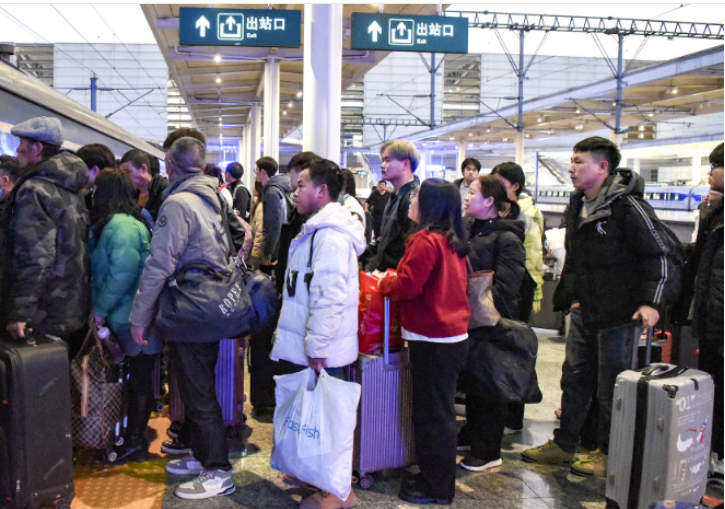

The chunyun, or Spring Festival travel rush, commenced on Friday, initiating the world’s largest annual human migration, with expectations to reach a new record of 9 billion passenger trips over the 40-day peak period. As the bustling scenes unfold in transportation hubs and markets nationwide, the anticipated Chinese New Year holidays are poised to contribute to the country’s ongoing recovery and set the stage for a vibrant 2024.
At Beijing Capital International Airport on Thursday, the departure hall witnessed crowds of tourists, families waiting for checked luggage, and Year of the Dragon stickers adorning glass doors, creating a festive Chinese Lunar New Year atmosphere. The airport forecasts a remarkable 60% growth, totaling 7.2 million passenger trips during chunyun, with 1.41 million overseas trips following new visa reciprocity policies.
Observers expect the travel rush to stimulate consumption during the holidays, injecting vitality into China’s economic progress in 2024. A retired white-collar worker, Yin, highlighted the tourism boom experienced during a pre-holiday self-driving road trip in Hainan Province, emphasizing the positive impact of well-constructed roads and convenient infrastructure on the travel experience.
Propelled by the record personnel flow and China’s economic recovery, both domestic and international tourism are anticipated to drive consumption. The recent mutual visa exemption agreement between China and Singapore, effective on the eve of the Chinese New Year, led to a surge in online searches for hotels and travel-related queries.
Domestic tourism, exemplified by ice-snow trips in cities like Harbin, is flourishing, with winter tourism bookings on platforms like Trip.com witnessing a more than tenfold increase year-on-year.
The record-breaking chunyun reflects China’s rapid advancements in transportation infrastructure, contributing to the nation’s economic recovery. Activities related to the cultural sector, such as museum visits, are expected to play a significant role in promoting consumption, according to Jiang Yiyi, deputy head of the School of Leisure Sports and Tourism at Beijing Sport University.
Consumption during the Chinese New Year holidays has also surged, with restaurants receiving bookings for traditional Spring Festival reunion dinners, and e-commerce platforms reporting increased sales as consumers stock up on holiday necessities.
Out of the 9 billion expected passenger trips, approximately 1.8 billion will be through various transportation modes, while the remaining 7.2 billion trips are projected to be self-driving. China’s railway system has witnessed a surge in ticket sales, with 61.08 million tickets sold since January 12, a 159% year-on-year increase.
To accommodate the expected rush, domestic carriers, including Air China, have increased efforts, planning over 67,000 flights during the 40-day peak, with a notable rise compared to previous years.
The robust consumption seen in 2023, contributing to 82.5% of GDP growth, is expected to extend into 2024, driving economic growth in the first quarter. Regional GDP data from provinces like Shanghai and Guangdong showcases positive achievements, laying a solid foundation for this year’s economic expectations.
As consumption becomes a primary driver of economic growth, experts emphasize the significance of developing consumption-related investments and industries. Holiday consumption is anticipated to significantly boost GDP growth for the first quarter of 2024, potentially exceeding projections by foreign institutions. China achieved a GDP growth of 5.2% in 2023, aligning with market forecasts.