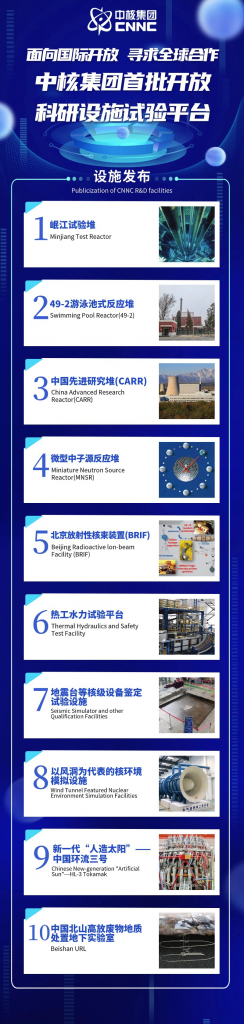

China National Nuclear Corporation (CNNC) has unveiled ten cutting-edge nuclear technology research facilities and testing platforms to international partners for the first time, signaling a significant step in enhancing China’s influence in global nuclear science and technology.
The announcement, made during the 17th China International Nuclear Industry Exhibition in Beijing on March 19, marks a milestone in China’s nuclear industry development. These facilities, including the HL-3 tokamak “artificial sun” and the Beijing Radioactive Ion-beam Facility (BRIF), are pivotal in advancing nuclear research and innovation worldwide.
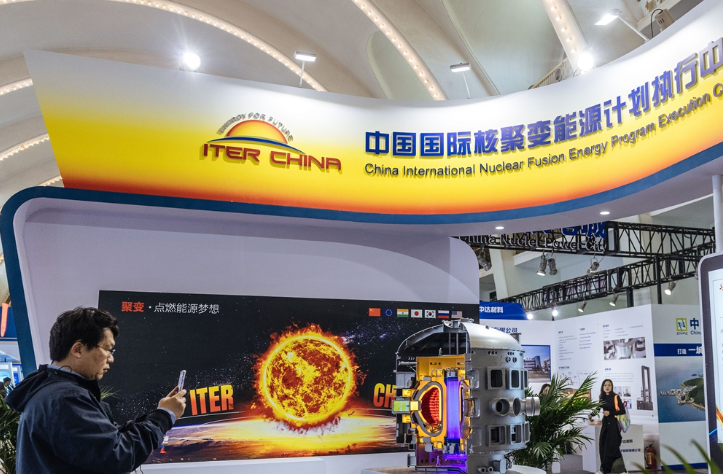
Among the showcased facilities is the HL-3 tokamak, China’s largest and most advanced device of its kind, designed to support the operation of the International Thermonuclear Experimental Reactor (ITER) and future fusion reactor development. Additionally, the Beishan Underground Research Laboratory (Beishan URL) and the BRIF are notable for their contributions to high-level radioactive waste disposal and isotope separation research, respectively.
CNNC’s initiative to open these facilities underscores China’s commitment to promoting international cooperation in nuclear science and technology. The move is expected to foster global collaboration and accelerate the development of nuclear technology worldwide.
According to Sumair N. Khan, Science and Technology Counselor at the Pakistani Embassy in China, access to these research facilities is crucial for developing countries like Pakistan. He highlighted the significance of facilities such as China’s advanced research reactor for advancing research efforts in countries with limited resources.
Zhang Libo, vice president of the China Institute of Atomic Energy, emphasized the importance of international cooperation in nuclear science for mutual benefit and scientific progress. By welcoming international partners to utilize these facilities, China aims to gain insights into global research trends and integrate into the broader international research community.
Overall, CNNC’s decision to open its advanced nuclear research facilities to the world signals a new era of collaboration and innovation in nuclear science and technology, fostering mutual understanding and progress on a global scale.