
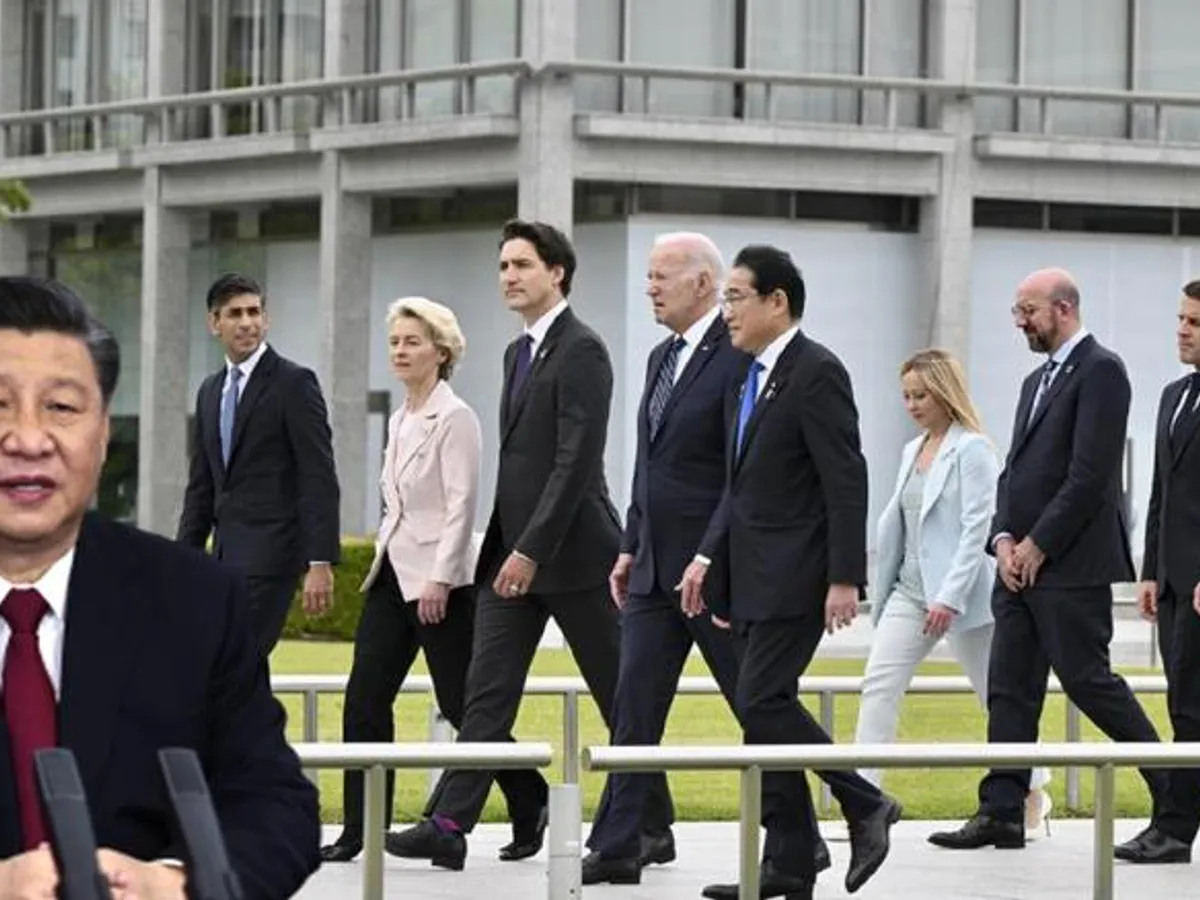

China has expressed its discontent to the United Kingdom after British Prime Minister’s remarks at the G7 summit, where China was singled out as the “biggest threat to global security and prosperity of our age.”
According to information obtained by Sky News, Chinese diplomats have registered their objections not only with the UK but also with the summit’s host, Japan, and other allied countries.
During the summit in Hiroshima, G7 leaders directed their criticism towards both Russia and China, eliciting strong reactions from both nations.
Despite the existing power imbalance in favor of China, the relationship between China and Russia is deepening. Russia’s Prime Minister Mikhail Mishustin is currently in Beijing for talks with Chinese leaders, ahead of an expected visit by President Vladimir Putin.
Prime Minister Rishi Sunak concluded the summit by warning that China is the “only country with both the means and intent to reshape the world order.” He emphasized the G7’s unanimous recognition of the systemic challenge posed by China to the global order.
The Hiroshima summit marks a significant moment in the Western world’s stance on China, as concerns about its threat have been growing. It was during this summit that the alliance explicitly formulated a joint position to counter China’s influence.
The war in Ukraine has served as a wake-up call for the West, highlighting the dangers presented by China. While China may present itself as a neutral broker in the conflict, it is actively supporting Russia by helping it evade Western sanctions and engaging in trade, including oil purchases. Western officials also suspect China of providing non-lethal and possibly even lethal military assistance.
However, the West sees China as a more significant long-term threat. China resents Western dominance and aspires to global supremacy, but its values often diverge from those of the West.
The G7 announced a joint effort to counter Chinese and Russian economic leverage, particularly in pressuring weaker nations. They also emphasized the need to “de-risk and diversify” economic ties, recognizing the vulnerabilities exposed by the COVID pandemic and the Ukraine conflict, where reliance on lengthy or single-country supply chains has proven risky.
China has issued stern diplomatic protests, known as demarches, to Japan and other countries, including the UK, in response to the summit’s outcomes.
The Hiroshima summit signifies a crucial step in the evolving Western posture towards China but also carries the risk of further aligning Beijing with Moscow. China already provides political, economic, and limited military support to Russia, although not without reservations due to Russia’s performance in the war.
The Western alliance must carefully navigate between recognizing the long-term dangers posed by China and the immediate need to untangle Beijing’s problematic relationship with Moscow.