

BEIJING — China’s central bank, the People’s Bank of China (PBOC), officially launched the 500-billion-yuan ($71 billion) Securities, Funds, and Insurance companies Swap Facility (SFISF) on Thursday, marking the country’s first capital market-targeted monetary tool. This initiative, along with recent economic stimulus policies, aims to enhance market liquidity and bolster investor confidence, experts say.
The SFISF allows qualified securities brokerages, fund companies, and insurers to use various assets—including bonds, exchange-traded funds, and holdings in the benchmark CSI 300 Index—as collateral in exchange for highly liquid assets like treasury bonds and central bank bills. The program’s application opened on Thursday, with an initial capacity of 500 billion yuan, which could be expanded as needed.
PBOC Governor Pan Gongsheng previously announced the initiative in late September, highlighting its potential to “significantly enhance firms’ ability to access funds to buy stocks.”
Experts believe the SFISF will facilitate increased capital inflows into the A-share market and help stabilize prices, reducing the risk of panic selling. Zhu Hualei, a senior investment consultant at Jufeng Investment Information, noted that the program would provide essential liquidity to financial service providers, reinforcing investor confidence.
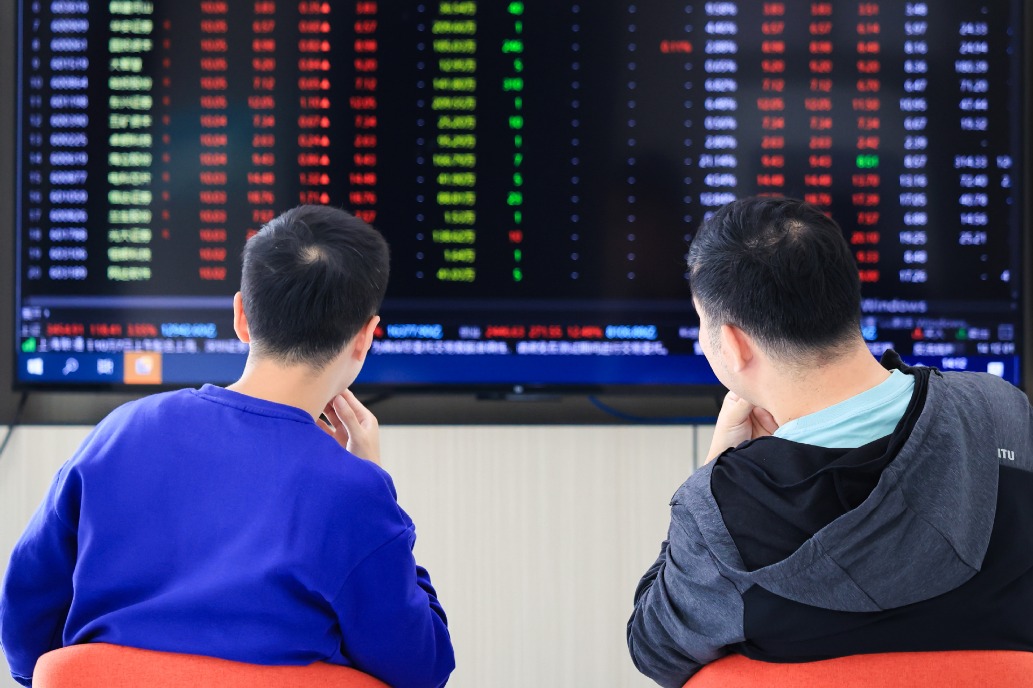
On the same day, the benchmark Shanghai Composite Index rose by 1.32%, closing at 3301.93 points, while the Shenzhen Component Index fell by 0.82%. Trading remained active, with a combined trading volume exceeding 2.1 trillion yuan, and several state-backed enterprises in Shenzhen hitting the daily price increase limit of 20%.
Xu Zhong, deputy director of the National Association of Financial Market Institutional Investors, clarified that the SFISF does not imply the central bank is directly entering the stock market, as it does not expand the monetary base or the central bank’s balance sheet.
The SFISF is likened to the U.S. Federal Reserve’s Term Securities Lending Facility (TSLF), which was introduced during the 2008 financial crisis to improve liquidity. Robin Xing, chief China economist at Morgan Stanley, emphasized that the SFISF, along with other fiscal measures, has significantly bolstered market confidence.
Describing the SFISF as “unprecedented,” Deutsche Bank’s chief China economist, Xiong Yi, observed that market sentiment improved immediately following the announcement, as evidenced by rising indexes and increased trading volumes.
Looking ahead, Finance Minister Lan Fo’an is expected to unveil plans for “intensifying counter-cyclical adjustment of fiscal policy to promote high-quality economic development” at a news conference on Saturday. Industry experts estimate that the new fiscal policies could exceed 2 trillion yuan and may include measures such as raising the deficit ratio and issuing special treasury bonds.