
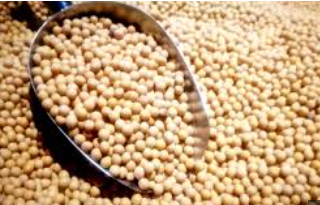

China is projected to import 30 million metric tons of soybeans from the United States during the 2025 marketing year (Sept 1, 2024, to Aug 31, 2025), with both countries recognizing significant opportunities for expanding agricultural cooperation, according to a senior executive of the US Soybean Export Council. Janna Fritz, the council’s vice-chair, noted that China’s demand for soybeans will continue to drive global trade growth, especially in the context of increasing imports in the coming years.
Growing Demand for U.S. Soybeans in China
Fritz emphasized that the global soybean trade, particularly between China and the U.S., is expected to experience significant growth, with China’s total soybean imports forecast to increase from 104.1 million tons in the 2025 marketing year to 138.3 million tons by 2034. The U.S., along with Brazil and Argentina, is expected to remain a major supplier, together accounting for 90% of the global soybean trade by 2034, with U.S. soybean exports projected to reach 58.1 million tons by that time.
China remains the largest export destination for U.S. soybeans, making up more than 50% of the total U.S. soybean exports. For the 2024 marketing year, the U.S. shipped 24.96 million tons of soybeans to China, according to the U.S. Soybean Export Council.
China-U.S. Agricultural Cooperation: A Key Growth Driver
The cooperation between U.S. soybean producers and Chinese buyers is seen as mutually beneficial, not just in terms of economic growth for both countries, but also in contributing to global food security and sustainable agriculture. Fritz highlighted the interconnectivity of the two economies and emphasized that there remains significant untapped potential for agricultural collaboration.
“We believe the economies of both countries are interconnected and there is significant potential for agricultural collaboration,” said Fritz. This collaboration is not limited to soybeans but extends to other agricultural commodities like corn and cotton, with China being a major buyer of these U.S. exports.
Stable China-U.S. Economic and Trade Relations
The ongoing cooperation between China and the U.S. is also supported by stable economic and trade relations. In the first ten months of 2024, China-U.S. trade grew by 4.4% year-on-year to 4.01 trillion yuan ($556 billion), accounting for 11.1% of China’s total trade. Experts like Wang Xuejun, a professor at Nanjing Agricultural University, emphasize that China, as the world’s largest importer of agricultural products, is a primary market for U.S. agricultural exports. For both countries, stable trade relations can help meet domestic demand, stabilize prices, and ensure a steady supply of key agricultural products.
Li Guoxiang, a researcher at the Chinese Academy of Social Sciences, also pointed out that the importation of agricultural products from the U.S. helps China manage market volatility and ensures steady domestic food prices, especially in the context of global climate change and geopolitical fluctuations. This relationship helps to safeguard China’s food security, making it a strategic economic partnership for both countries.
China’s Push for High-Quality Growth in Agriculture
The collaboration is not just about the import-export relationship; it also aligns with China’s high-quality growth goals in agriculture. According to Liu Chang, vice-president of Cargill Investments (China), the Chinese push for innovation and advanced productivity in agriculture has become a key factor in transforming the industry. Both the industrial and supply chains are undergoing significant improvements, driven by China’s broader goals for sustainable agricultural growth and technological advancement.
The U.S. Soybean Export Council anticipates that with the right trade policies in place, this relationship will continue to flourish. Fritz expressed confidence that regardless of the political environment in the U.S., the soybean industry is committed to maintaining a positive trade relationship with China, helping to ensure the long-term success of the agricultural sector in both countries.
Future Outlook
Looking ahead, the potential for agricultural cooperation between China and the U.S. remains strong, with both countries benefiting from expanded trade in soybeans and other key agricultural commodities. The U.S. Soybean Export Council envisions that even amid trade policy changes or political shifts, the agricultural ties will remain resilient, contributing to both economic growth and food security.
With China’s increasing demand for soybeans, its evolving agricultural policies, and the longstanding relationship with the U.S., this collaboration seems set to play a pivotal role in global agricultural markets over the coming years.