
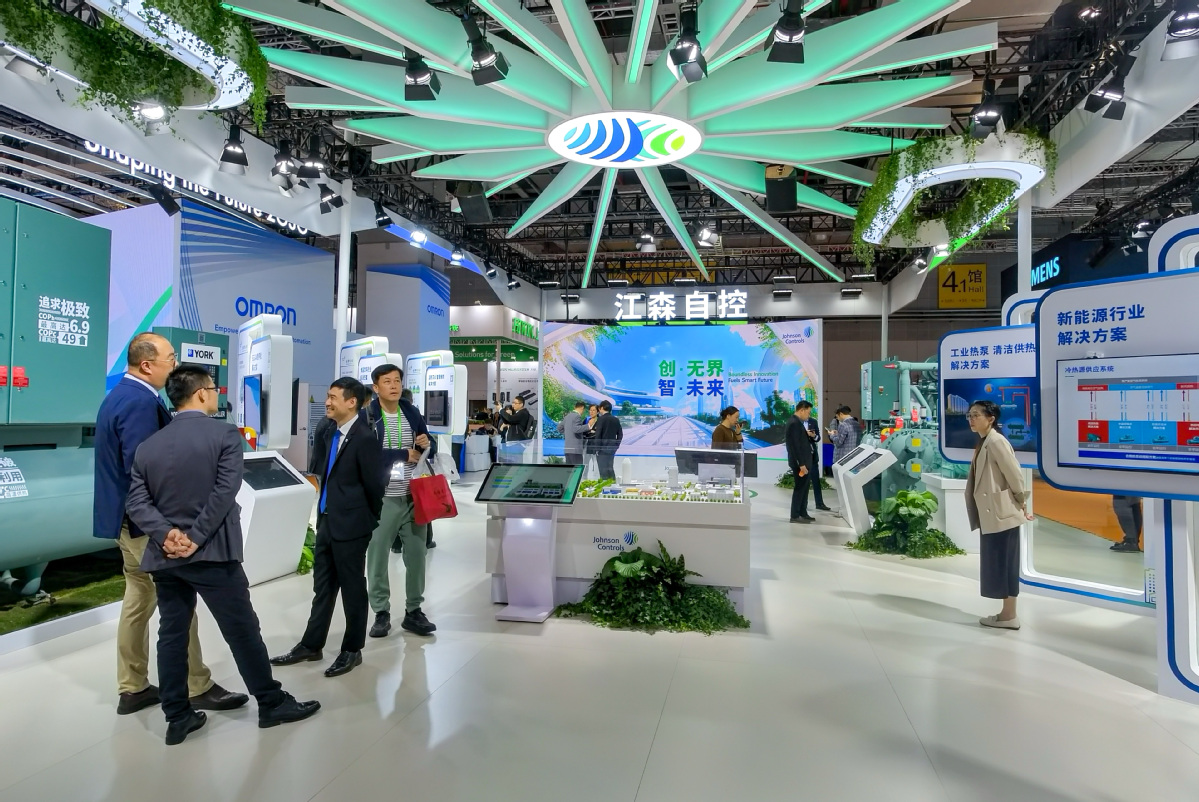

United States-based smart building solutions provider, Johnson Controls, has reaffirmed its dedication to China, highlighting the significant growth opportunities emerging from the country’s ongoing digital transformation and its drive toward green, sustainable development. As the company marks nearly three decades of operations in China, it sees a bright future in the rapidly evolving market.
A Critical Market for Johnson Controls
Anu Rathninde, President of Johnson Controls Asia-Pacific, emphasized that China has always been a key market for the company. “The scale of the market, the speed of technological development, and the abundant talent make it a unique environment for growth and innovation,” Rathninde said, underscoring the country’s importance to the company’s regional and global strategy.
With a strong presence in China, Johnson Controls operates 10 manufacturing plants, three research and development centers, and a workforce of over 8,000 employees spread across 49 locations. The company’s expansion in China has been facilitated by the country’s push for “high-standard opening-up” in recent years, particularly through policies that have encouraged foreign investment.
Leveraging China’s Digital Transformation
Rathninde pointed to China’s rapid digital transformation, which is happening at an accelerated pace compared to other parts of the world. Johnson Controls has capitalized on this trend by developing innovative smart building solutions, contributing to China’s vision of creating more sustainable and efficient cities.
“Digital transformation is happening faster in China than elsewhere, and we are deeply involved in making buildings smarter, healthier, and more sustainable,” he said. In particular, cities like Shanghai and Beijing, with their dense populations and aging infrastructure, offer significant opportunities for retrofitting and upgrading buildings to improve energy efficiency and reduce carbon emissions.
Driving Sustainability with Energy-Efficient Solutions
As part of its commitment to sustainability, Johnson Controls has introduced a range of energy-efficient solutions aimed at addressing the carbon footprint of China’s building stock. Rathninde noted that buildings in China contribute to 40 percent of carbon emissions and consume 35 percent of the country’s energy. Upgrading existing structures with advanced energy-efficient systems, including digitally connected platforms, is seen as critical for helping China meet its ambitious environmental goals—peaking carbon emissions by 2030 and achieving carbon neutrality by 2060.
The company is actively working on solutions to optimize building operations and reduce energy consumption, aligning its goals with China’s broader green transition. This includes developing smarter and more sustainable infrastructure to meet the needs of rapidly growing urban centers.
A Hub for Innovation and Talent
Johnson Controls has increasingly focused on localizing its operations in China, tailoring products and solutions to the specific needs of the market. The company’s decision to move its Asia-Pacific headquarters to Shanghai in 2017 reflects the importance of China in Johnson Controls’ global strategy.
Rathninde emphasized that China is no longer just a low-cost manufacturing hub; it has evolved into a technology and innovation powerhouse. “We see huge growth potential, not just in scale, but in quality and talent. Every year, China produces a large number of skilled engineers, and the country is a leader in AI research,” he said. This makes China an ideal base for developing future-focused solutions.
A Long-Term Partnership
Looking to the future, Rathninde made it clear that Johnson Controls is committed to continuing its partnership with China for the long haul. “We’ve grown with China, and we look forward to continuing this partnership for the next 30 years,” he said, reiterating the company’s belief in China as a vital part of its global growth strategy.
As the country’s demand for digital and green solutions continues to rise, Johnson Controls is well-positioned to play a key role in China’s urban and industrial transformation, contributing to a smarter, more sustainable future.