
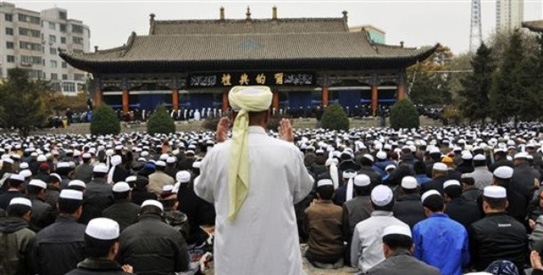

Authorities in China have given a deadline to protesters who disrupted plans to demolish an ancient mosque, urging them to turn themselves in for “disrupting social order” and engaging in “criminal acts.” The town of Nagu, predominantly inhabited by Muslims, witnessed clashes over the weekend as authorities moved forward with their intention to destroy four minarets and the dome roof of the Najiaying Mosque, which dates back to the 13th century.
According to a resident who preferred to remain anonymous, the mosque had expanded its minarets and dome roof in recent years. However, a local court declared these additions to be illegal, prompting the authorities to proceed with the demolition plans.
The province of Yunnan, where Nagu is located, is home to a significant Hui Muslim community that has faced increasing pressure due to a broader crackdown on religious and ethnic minorities. President Xi Jinping has called for the “Sinicization” of these communities, as part of efforts to assimilate them into the Chinese culture.
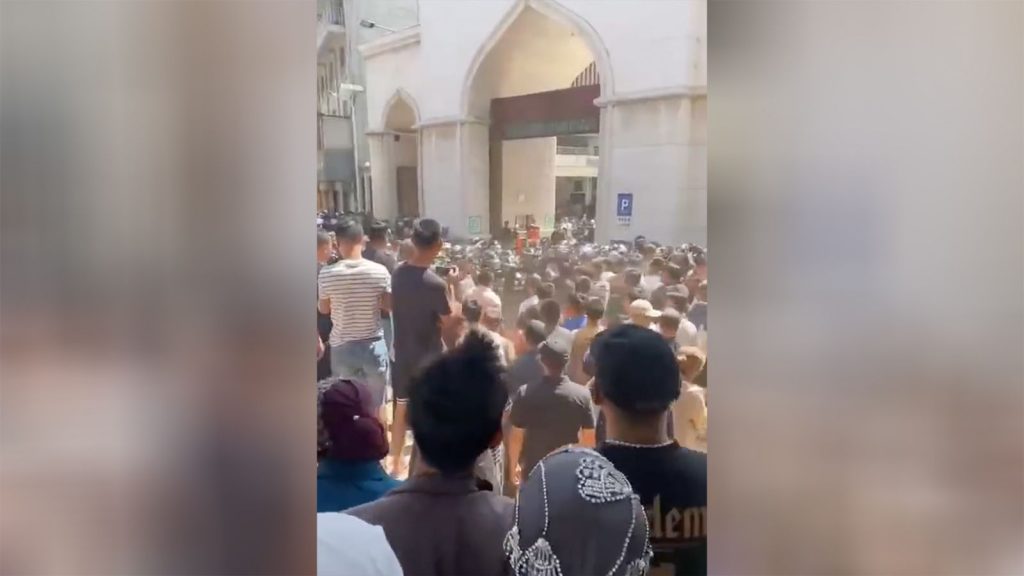
Videos shared on social media and witness testimonies reveal that on Saturday, a crowd outside the mosque clashed with dozens of officers equipped with truncheons and riot shields. The protesters hurled objects at the police in an attempt to halt the forced demolitions. A local woman expressed her concerns, stating, “The mosque is home for Muslims like us. If they try to knock it down, we certainly won’t let them. Buildings are just buildings – they do no harm to people or society. Why do they have to destroy them?”
Following the incident, an unspecified number of arrests were made, and a significant police presence remained in the town as of Monday. The Tonghai government, responsible for administering Nagu, issued a notice announcing an investigation into the “severely disrupted social management and order.” The notice called on those involved to cease all illegal and criminal activities immediately, warning of severe punishment for those who fail to surrender. However, it also mentioned that individuals who voluntarily surrender and provide truthful confessions may receive lighter punishments according to the law.
Under President Xi’s leadership, China has implemented strict controls on religion, with a particular focus on its crackdown on Muslims, which the government claims is aimed at combating terrorism and extremist ideologies. The western Xinjiang region has seen the most severe impact, with approximately one million Uighurs, Hui, and other Muslim minorities detained since 2017 in government-run “re-education” camps. Outside of Xinjiang, communities have experienced milder effects, including the demolition or forced renovation of mosques to align with the Chinese aesthetic standards.
As clashes erupt at an ancient mosque in China, concerns are mounting over the treatment of Uighurs and other Muslim minorities in the country. China’s tight control over religion, particularly since President Xi Jinping’s rise to power, has led to a crackdown on Muslims under the pretext of combating terrorism and extremist thought. The government’s campaign of “re-education” in the western Xinjiang region has resulted in the detention of approximately one million Uighurs, Hui, and other Muslim minorities since 2017.
While the impact on communities outside Xinjiang has been relatively less severe, there has been a disturbing trend of mosque demolitions or “coercive renovations” to align with official Chinese aesthetics. This cultural assimilation has raised concerns among experts and human rights advocates.
David Stroup, an expert on the Hui community at the University of Manchester, warns that the plight of China’s Muslims could be ignored despite the release of a UN report on the abuse they face. Uighurs fear that the international community may turn a blind eye to their suffering, as they have witnessed in the past.
As the clashes continue at the ancient mosque in Nagu, the plight of China’s Muslim minorities remains a pressing issue. The demolition plans have sparked protests and raised questions about the government’s respect for religious freedom and cultural diversity. The future of the mosque and the well-being of the affected communities hang in the balance as the world watches and debates the response to China’s treatment of its Muslim population.
It is crucial for the international community, including the United Nations, to address these concerns and hold China accountable for its actions. The human rights and dignity of all individuals, regardless of their religious or ethnic background, should be protected and upheld. The fate of China’s Muslims should not be ignored, and concerted efforts must be made to ensure their rights are safeguarded and their voices heard.