
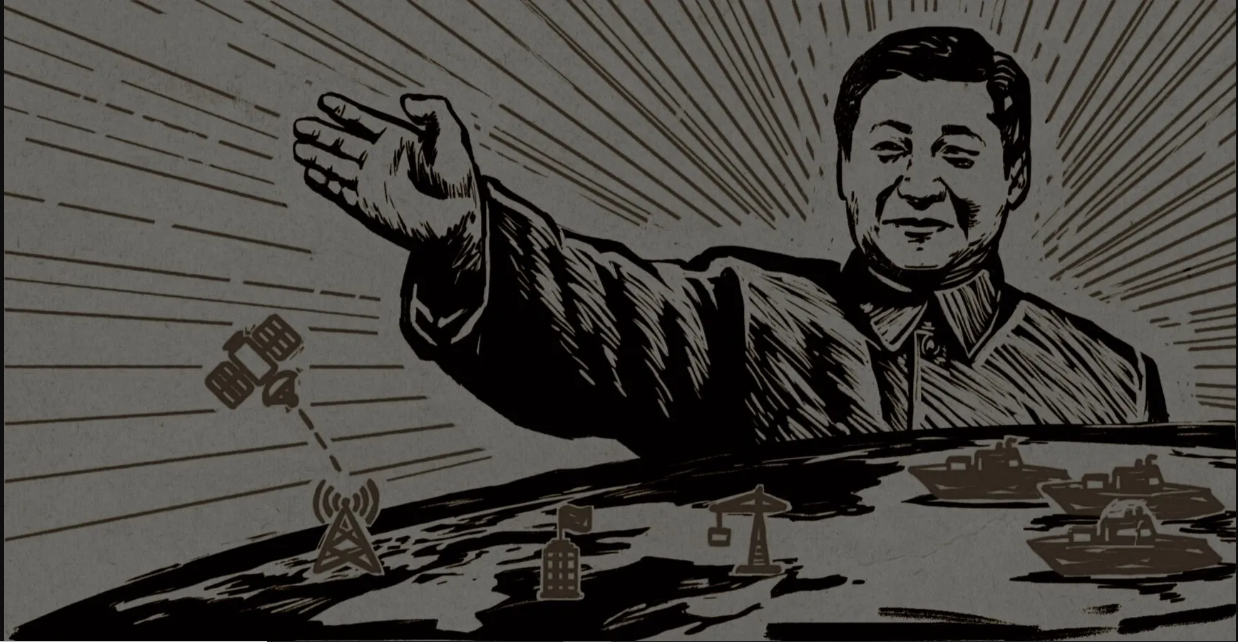

At the Second Jimmy Carter Forum on U.S.-China Relations, Chinese Ambassador to the United States, Xie Feng, delivered a thoughtful and diplomatic address calling on both nations to draw from history as they navigate their complex relationship. In his remarks, Xie emphasized the significance of returning to the original aspirations set forth when U.S.-China relations first began to take shape, advocating for a renewed commitment to cooperation and mutual respect.
Xie’s speech comes at a time of heightened tensions between the two powers, marked by disputes over trade, technology, human rights, and military presence in the Indo-Pacific. Despite these challenges, Xie expressed hope that the U.S. and China could look to their shared history for guidance in improving ties. He urged both nations to remain grounded in their original principles of engagement and collaboration, which were central to the establishment of diplomatic relations between the U.S. and China in 1979, under the leadership of then-President Jimmy Carter.
The Ambassador underscored the necessity of constructive dialogue to overcome current challenges. He noted that while both countries are rivals on the world stage, they also share numerous global interests—such as climate change, public health, and economic stability—that require mutual cooperation. According to Xie, these shared concerns provide a natural foundation for collaboration, despite differences in other areas.
In particular, Xie called for respect for each nation’s sovereignty and political system, which has been a point of contention in recent years. He cautioned against approaches that seek to impose one country’s values or systems on the other, emphasizing that U.S.-China relations should be based on equality and non-interference.
However, many analysts view Xie’s comments as part of China’s broader strategy to ease tensions while holding firm on key issues, such as Taiwan and trade practices, where the two countries have starkly different views. The Chinese government’s position remains steadfast in its desire for a stable and predictable relationship with the U.S., but one that does not compromise China’s national interests.
Xie’s appeal to historical inspiration also touches on a broader narrative that has been central to Chinese foreign policy—reclaiming a sense of historical dignity and standing on the global stage after centuries of perceived subjugation. For Beijing, the path forward requires not just managing bilateral relations with the U.S., but also asserting China’s growing influence in global governance, a task that often puts it at odds with Washington’s international priorities.
The speech notably follows remarks by U.S. officials who have echoed similar calls for engagement, even as they express concerns about China’s rise. As both nations grapple with how to define their future relationship, Xie’s words highlight a clear message: cooperation and mutual respect, grounded in history, offer the most sustainable path forward. Whether this vision can be realized depends on the willingness of both sides to overcome their current obstacles and focus on shared goals for the future.
In the context of the broader geopolitical landscape, Xie’s address serves as both a reminder and a call to action, urging the U.S. and China to find common ground, even as they face fundamental differences. Whether the two countries can put aside their rivalry and focus on mutual interests will likely determine the trajectory of their relationship in the years to come.
source: fmprc.gov.cn