
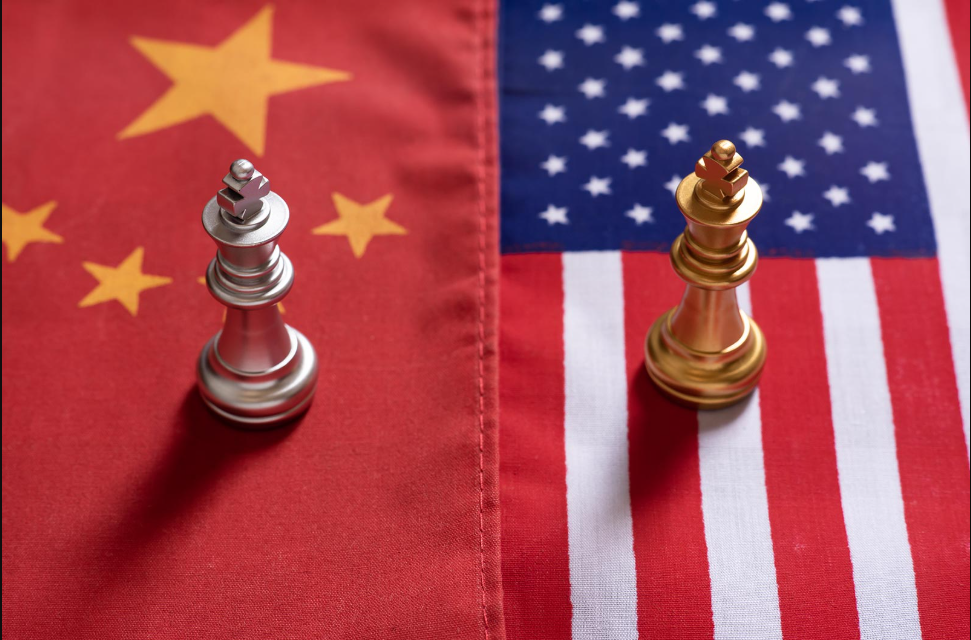

In a surprising turn of events, U.S. sanctions aimed at curbing China’s growing global influence have inadvertently strengthened the nation’s economic position. While these measures were designed to isolate China from the global market and diminish its technological advancements, experts now point to a paradoxical effect—China is adapting more swiftly than expected, gaining new economic partners, and accelerating its technological self-sufficiency.
U.S. efforts to impose trade restrictions on Chinese tech giants, such as the blacklisting of companies like Huawei and the imposition of tariffs on Chinese exports, have forced China to rethink its approach to global trade. Rather than weakening its position, China has become more self-reliant, cultivating domestic industries and expanding trade relations with countries that view the sanctions as a threat to their own interests.
“Sanctions have provided China with the push it needed to double down on innovation and seek alternative markets,” said Dr. Mei Li, a Beijing-based economist. “In a way, these restrictions are pushing China to become less dependent on the West, strengthening its technological and economic systems.”
One of the most notable developments has been China’s accelerated progress in semiconductors and artificial intelligence. With restricted access to U.S.-made chips and technologies, Chinese firms have poured resources into developing domestic alternatives. As a result, China has reduced its dependency on U.S. tech and even begun to export new technologies to other countries.
Furthermore, China’s Belt and Road Initiative (BRI), a global infrastructure development plan, has gained momentum. Several countries, particularly in Africa, Southeast Asia, and Latin America, have welcomed Chinese investment, seeing it as a counterbalance to what they perceive as U.S. economic and geopolitical dominance. These nations are not only buying Chinese-made goods but are also integrating Chinese technology into their own infrastructure.
“The sanctions have helped China reposition itself as a reliable partner to many countries who are wary of U.S. foreign policy,” said Ryan McCauley, an international relations expert based in Washington, D.C. “By diversifying its partnerships and focusing on innovation, China has created new avenues for growth.”
Despite the apparent economic resilience, some analysts caution that the long-term impact of sanctions remains uncertain. While China’s economy is more insulated than before, it still faces significant challenges, particularly with regard to demographic shifts and environmental concerns.
Nevertheless, as China continues to adapt to the changing geopolitical landscape, the unintended consequence of U.S. sanctions is becoming evident: China is emerging as a stronger, more independent global player, one that is increasingly less reliant on the West.
source: asia.nikkei.com