
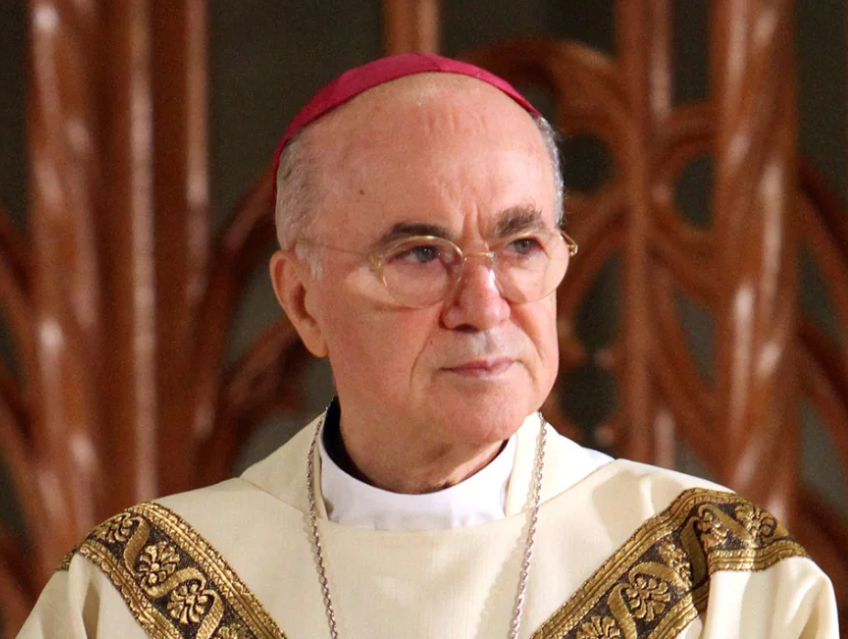

In a scathing statement released just days before the start of the highly anticipated conclave, Archbishop Carlo Maria Viganò has sharply criticized the Vatican’s ongoing agreement with China, claiming it undermines the Church’s autonomy and compromises its moral integrity. His remarks, made public on the eve of crucial discussions about the future direction of the Catholic Church, have once again brought attention to the controversial 2018 deal between the Holy See and the Chinese government.
The Vatican-China agreement, which primarily concerns the appointment of bishops in China, has been a point of contention since its inception. While the deal was intended to improve relations between the Church and the Chinese government, critics, including Viganò, argue that it has resulted in the Vatican ceding too much control to Beijing over religious affairs within the country.
In his statement, Archbishop Viganò expressed grave concern over the implications of the deal, particularly its impact on the freedom of the Church in China and the spiritual welfare of Chinese Catholics. “The Vatican has abandoned the true pastoral mission of the Church in China in favor of political expediency,” Viganò asserted. “The agreement with a regime that systematically violates human rights is not only a betrayal of the faithful in China but also of the Church’s core principles.”
Viganò, a former apostolic nuncio to the United States, has long been an outspoken critic of Vatican policies that he perceives as compromising the Church’s teachings and its moral authority. His latest criticism comes at a time of heightened anticipation surrounding the forthcoming conclave, where cardinals will gather to elect the next pope. Viganò’s remarks are likely to add fuel to the ongoing debate about the Vatican’s approach to international diplomacy and its relationship with authoritarian regimes.
The Vatican has defended the deal with China as a necessary step to foster dialogue and ease tensions in a country where religious freedom has been severely restricted. Supporters of the agreement argue that it has allowed for the normalization of relations between the Vatican and the Chinese government, providing a platform for greater cooperation in a challenging geopolitical environment.
However, Viganò and other critics contend that the deal has failed to protect the rights of Chinese Catholics, many of whom remain subject to state persecution and are forced to worship in clandestine underground churches. “The Vatican’s silence on the Chinese government’s actions speaks volumes,” Viganò added. “By prioritizing political agreements over the faith of the people, the Vatican is betraying the very essence of what it means to serve Christ’s mission.”
As the Catholic Church approaches the conclave, where the future of the papacy will be decided, the issue of the Vatican’s relationship with China is expected to be a key topic of discussion among the cardinals. Some insiders suggest that the next pope will have to address the growing concerns about the Vatican’s foreign policy, especially regarding authoritarian regimes, in order to restore the Church’s credibility and moral leadership on the global stage.
The controversy surrounding the Vatican-China deal has already sparked heated debates among Church leaders and the faithful worldwide. As Viganò’s critique adds to the pressure, the upcoming conclave may become a pivotal moment for the Church to reassess its diplomatic priorities and reaffirm its commitment to standing firm on human rights and religious freedom.
source: newsmax.com