
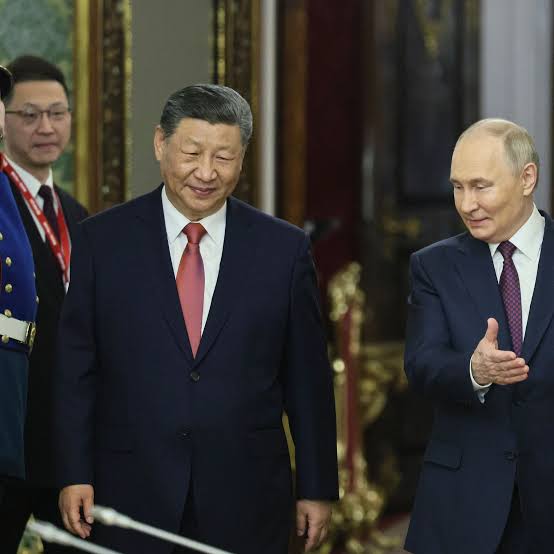

Despite mounting geopolitical pressure and strategic efforts to reshape the global order, the United States is finding it increasingly difficult to fracture the steadily strengthening partnership between Russia and China a bond driven by shared economic interests, mutual opposition to Western dominance, and a convergence of autocratic governance models.
In recent months, U.S. diplomats have intensified engagement with key allies in Europe and Asia, aiming to counterbalance the growing influence of the Moscow-Beijing axis. However, experts say the structural depth of Russia-China ties particularly in energy, defense, and technology makes any meaningful disruption highly improbable.
“The relationship has matured into something more than a tactical alignment,” said Fiona Hill, a senior fellow at the Brookings Institution and former White House adviser on Russia. “It’s now a strategic partnership, united by a common goal of challenging the U.S.-led international system.”
At the core of this alliance is a robust economic interdependence. China’s demand for Russian energy has surged in the wake of Western sanctions on Moscow, with bilateral trade surpassing $240 billion in 2024 a record high. Russia, in turn, increasingly relies on Chinese imports to replace Western technology and consumer goods lost to sanctions.
Beyond commerce, military cooperation between the two powers has grown more pronounced. Joint naval drills in the East China Sea, coordinated air patrols over the Sea of Japan, and shared intelligence initiatives reflect a mutual desire to project strength in Asia and beyond.
Washington officials continue to frame the Russia-China alignment as a “marriage of convenience” rather than a deep-rooted alliance, but some analysts argue that this underestimates the durability of their collaboration.
“Even if their interests don’t always align perfectly, the incentive to stand together against the West far outweighs their differences,” said Bonnie Glaser, managing director of the Indo-Pacific Program at the German Marshall Fund.
As the 2024 U.S. National Defense Strategy identified both China and Russia as top-tier threats, the prospect of confronting a unified front in Eurasia complicates Washington’s strategic calculus — especially as America seeks to avoid overstretching its global commitments.
The Biden administration has pushed for a clearer separation between Russia and China by leveraging trade incentives and security guarantees to sway Beijing away from unqualified support for Moscow. Yet Beijing remains cautious, avoiding overt military support for Russia’s war in Ukraine while doubling down on diplomatic and economic ties.
With the global balance of power in flux, the evolving Russia-China partnership stands as a formidable challenge to U.S. foreign policy one unlikely to be dismantled through conventional diplomatic pressure alone.
source: russianews.com