
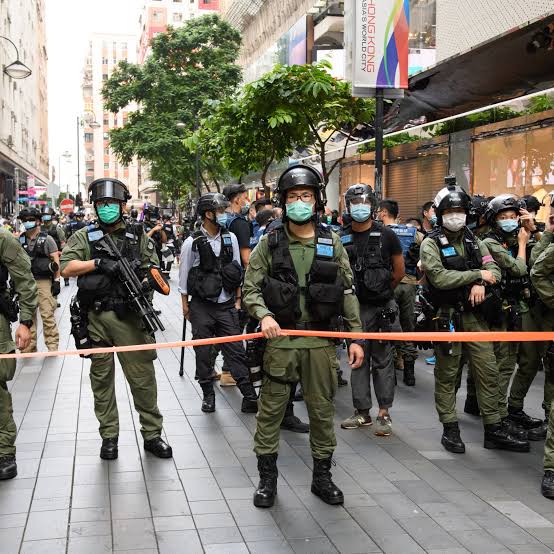

As the United States remains consumed by domestic political turmoil and growing international crises, authorities in Hong Kong have quietly accelerated their campaign to dismantle the city’s once-vibrant pro-democracy movement, raising alarms among rights groups and foreign observers.
Over the past month, Hong Kong’s government has broadened the use of its sweeping national security laws, arresting prominent activists, freezing opposition-linked assets, and tightening controls on media and civil society. The moves come amid a global environment of waning Western pressure and diminishing headlines on the city’s eroding freedoms.
Last week, more than a dozen activists including several former lawmakers and organizers of the now-disbanded Civil Human Rights Front were arrested under the updated Article 23 national security law. Critics say the law, passed in March 2024, grants authorities expansive power to define and suppress acts of “treason,” “sedition,” and “foreign interference.”
“The new wave of arrests sends a chilling message that dissent will no longer be tolerated even in its mildest form,” said Maya Cheng, a legal analyst at the Asia Democracy Network. “With the U.S. distracted, Beijing sees an opportunity to finish what it started in 2020.”
Indeed, Washington has been notably muted in its recent responses to developments in Hong Kong. Preoccupied with rising tensions in the Taiwan Strait, ongoing instability in Eastern Europe, and a contentious presidential campaign at home, the Biden administration has largely relegated Hong Kong to the periphery of its foreign policy agenda.
“This is a test case in how authoritarian regimes exploit geopolitical distraction,” said James Hathaway, a senior fellow at the Council on Global Democracy. “Beijing is counting on international fatigue to push through its final consolidation of control.”
Independent media in the city has also come under renewed scrutiny. At least two digital news platforms have shuttered operations in recent weeks, citing increased pressure from security agencies and the threat of prosecution. Journalists who once reported freely on government actions now describe a climate of fear and pervasive surveillance.
In a statement, a spokesperson for the Hong Kong government said that all actions taken were in accordance with the law and aimed at “safeguarding national sovereignty and ensuring public order.”
But for many Hong Kong residents, the new normal is one of silence and self-censorship.
“We used to march in the streets with hundreds of thousands,” said a former protester who requested anonymity. “Now we whisper and wonder who’s listening.”
The international community, particularly Western democracies, faces mounting criticism for what some see as a slow retreat from defending democratic values in the face of authoritarian pressure.
“The people of Hong Kong deserve more than statements of concern,” said Cheng. “They need solidarity, protection, and action.”
For now, though, such support remains elusive and the crackdown continues, largely unnoticed by a world with its attention turned elsewhere.
source: time.com