
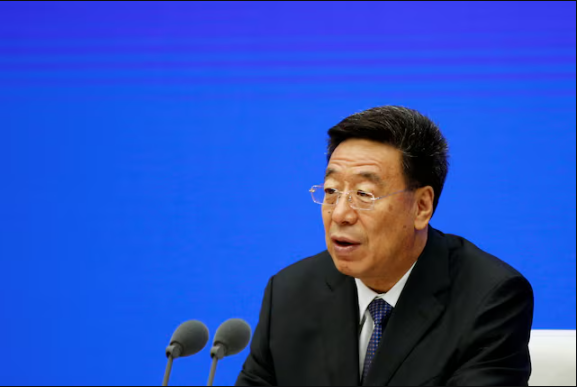

Zhang Qingli, former Communist Party Secretary of Tibet Autonomous Region, has been handed a suspended death sentence after being convicted of accepting massive bribes during his tenure the latest in a string of high-profile corruption cases under China’s sweeping anti-graft campaign.
The Intermediate People’s Court in Changsha, Hunan province, announced the verdict on Tuesday, stating that Zhang abused his powerful political positions to secure business favors, manipulate promotions, and channel illegal benefits to family members and associates in exchange for bribes exceeding 140 million yuan (approximately $19 million USD).
The court ruled that the death sentence would be suspended for two years and could be commuted to life imprisonment without parole, depending on his behavior in prison.
A Fall from Power
Zhang, now 71, served as the Party secretary of Tibet from 2005 to 2011 and later held senior roles in Hebei Province and national political advisory bodies. He was known for his hardline stance on ethnic policies and his loyalty to the party center. However, prosecutors alleged that behind his image of discipline, Zhang cultivated a network of influence trading and illicit enrichment over a period spanning more than a decade.
Investigators from the Central Commission for Discipline Inspection (CCDI) said he used his position to interfere in land development projects and state enterprise contracts, often funneling kickbacks through family-run shell companies.
Public Reaction and Political Context
The sentencing is the latest sign that President Xi Jinping’s anti-corruption drive remains active, even as the campaign enters its second decade. Since its launch in 2012, the campaign has toppled over 4 million officials at all levels, including “tigers” senior leaders once considered untouchable.
“This case reinforces the message that no one is above the law, even those who once governed strategically sensitive regions like Tibet,” said Wang Jianxun, a legal scholar at China University of Political Science and Law. “But it also reflects the internal tensions between maintaining control and confronting systemic corruption.”
Public reaction on Chinese social media was largely supportive, though some users questioned why the sentence was suspended and not carried out immediately. “He sold out the people for his own gain,” read one comment on Weibo. “A death sentence should mean death.”
Broader Implications
Zhang’s conviction may also signal greater scrutiny of former leaders in ethnic minority regions like Xinjiang and Tibet, where local governance intersects tightly with national security priorities. Analysts say Beijing is keen to root out any behavior that threatens central control or undermines public confidence in regional leadership.
While Zhang expressed remorse and agreed to forfeit all illegal gains, the court stated that the “extremely serious” nature of his crimes warranted the harshest possible penalty within the legal framework.
Conclusion
As China’s leadership continues to project zero tolerance for corruption, Zhang Qingli’s sentencing serves as both a cautionary tale and a reaffirmation of the party’s political discipline a reminder that even once-powerful insiders can fall in the name of party purity.