
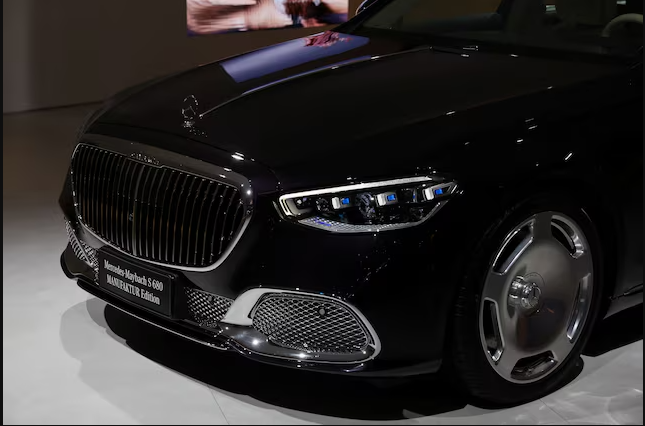

German automaker Mercedes-Benz has revised its full-year profit margin forecast downward, citing growing cost pressures from newly imposed U.S. tariffs the latest sign that transatlantic trade tensions are beginning to bite into Europe’s industrial giants.
The luxury carmaker, which had previously targeted an adjusted return on sales between 9% and 11% for its core auto division, now expects margins to fall within the 7% to 9% range. Executives attributed the change to increased import duties on European-made vehicles and components shipped into the United States, which remains one of Mercedes-Benz’s largest and most lucrative markets.
“In light of the evolving trade environment, particularly the additional tariffs impacting our U.S. operations, we are adjusting our margin expectations for the remainder of the year,” the company said in a statement on Tuesday.
The U.S. administration imposed a fresh wave of tariffs on European automotive imports earlier this month in response to what it described as unfair subsidies and market access restrictions. While EU leaders have pledged to challenge the measures through the World Trade Organization, companies like Mercedes-Benz are already feeling the pinch.
Chief Financial Officer Harald Wilhelm noted that while demand for Mercedes models remains solid in North America, the tariffs are “materially impacting profitability” due to increased supply chain costs and limited flexibility in short-term pricing.
To help mitigate the impact, the company is exploring production shifts to its U.S. plant in Alabama and revising global logistics routes. However, analysts warn that such changes are unlikely to offset the near-term financial drag.
“The tariffs are striking at the heart of Mercedes-Benz’s high-margin export strategy,” said Lisa Bergstrom, an auto industry analyst with Munich-based Deutsche Motor Intelligence. “Even modest duties can significantly dent margins when applied across high volumes of premium vehicles.”
Despite the headwinds, Mercedes-Benz reported steady sales growth in China and Europe, driven by strong performance in electric vehicle (EV) models and higher-end trims. But management warned that ongoing geopolitical risks and regulatory uncertainty could further cloud the outlook for the second half of the year.
Shares in Mercedes-Benz Group AG fell 2.4% in Frankfurt trading following the announcement, underperforming the broader DAX index.
As automakers navigate a complex global trade landscape, Mercedes-Benz’s forecast revision underscores the fragility of international supply chains and the high stakes for Europe’s export-driven manufacturing sector.