
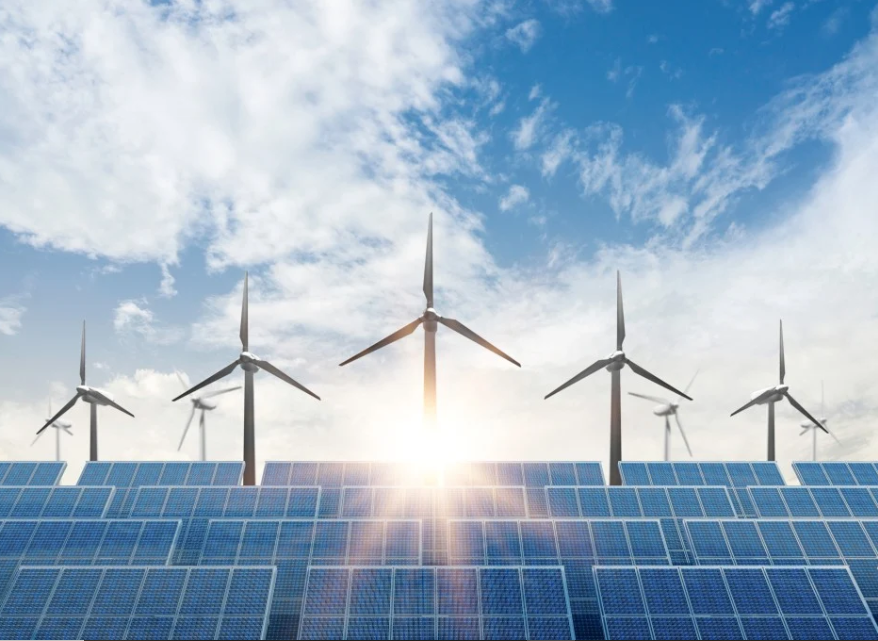

China has accelerated its renewable energy market reform by five years, unveiling a bold target to achieve 30% electrification across its economy, a move aimed at slashing carbon emissions and bolstering energy security.
The National Development and Reform Commission (NDRC) announced that the country’s renewable energy marketisation originally slated for the early 2030s will now be completed by 2025. This push is expected to strengthen market-driven mechanisms, improve power grid integration, and expand the role of renewables in industrial, transport, and residential sectors.
Officials say the accelerated timeline reflects both technological advances and growing urgency to meet China’s carbon neutrality pledge by 2060. “This is not just about clean power; it’s about transforming the energy structure of the world’s second-largest economy,” said Li Chao, an energy policy analyst in Beijing.
The plan calls for scaling up wind, solar, and hydropower generation, coupled with large-scale battery storage projects to ensure stability in the grid. It also places a strong emphasis on electrifying traditionally fossil fuel–reliant sectors such as manufacturing and heavy transport.
Industry experts believe the shift could significantly reduce China’s dependence on coal, which still accounts for more than half of its electricity generation. By fostering competitive pricing for renewable power, Beijing aims to attract greater private investment and accelerate innovation in clean energy technologies.
China’s move comes amid a global race to decarbonise economies and expand green energy infrastructure. The accelerated marketisation is expected to put pressure on other major economies to match the speed and scale of China’s energy transition.
If successful, the plan could make China a global leader not only in renewable capacity but also in integrating clean energy into all aspects of economic life a feat that could redefine the future of energy markets worldwide.