
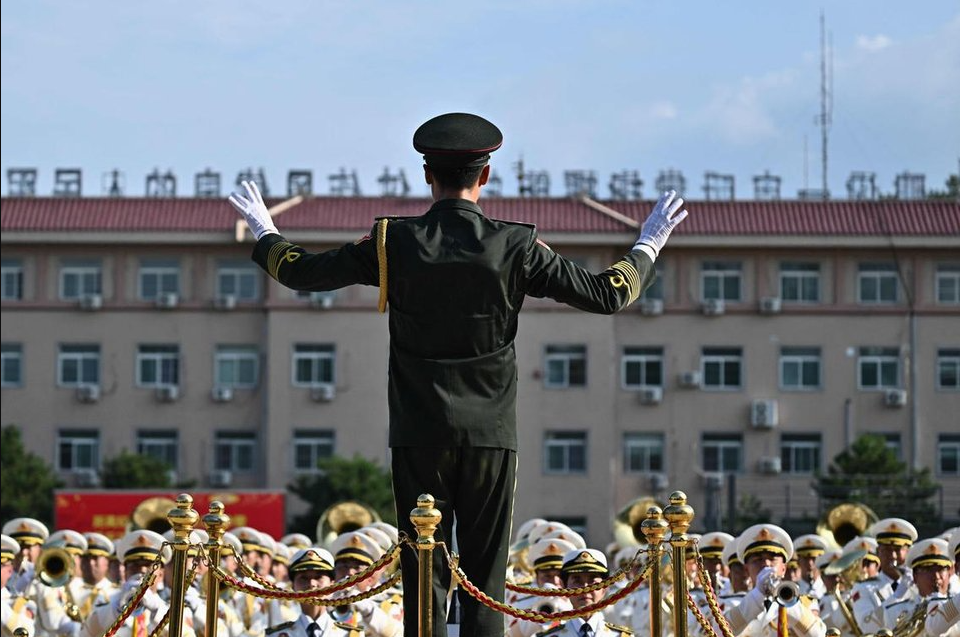

China marked the 80th anniversary of the start of its war of resistance against Japan this week with solemn ceremonies, academic forums, and cultural events, underscoring both the enduring scars of conflict and the ongoing quest for reconciliation in East Asia.
The commemorations, centered in Beijing and several key battleground provinces, honored the sacrifices of millions of Chinese soldiers and civilians who resisted Japanese occupation between 1937 and 1945, a struggle that remains deeply etched in the nation’s collective memory.
At a memorial event in the capital, senior Chinese leaders paid tribute to the resilience of the wartime generation while calling for peace and mutual respect in international relations. “History teaches us the value of unity and the cost of aggression,” one official said, stressing that the lessons of the past must guide future cooperation in Asia.
Despite the formal tone of reconciliation, analysts say historical grievances continue to complicate China-Japan relations. Contentious issues such as wartime atrocities, territorial disputes in the East China Sea, and perceptions of Japan’s treatment of history in textbooks and politics remain sensitive flashpoints.
“While there has been significant progress in trade and diplomacy, trust between the two nations is fragile,” noted Professor Li Wen of Fudan University. “Commemorations such as this serve as reminders of pain but also opportunities to build dialogue.”
Japan, for its part, has sent mixed signals. Prime Minister Fumio Kishida acknowledged the anniversary in a brief statement, reiterating Japan’s post-war commitment to peace and cooperation. However, Chinese state media criticized what they described as Tokyo’s “ambiguous stance” on wartime accountability.
Beyond geopolitics, the anniversary has also rekindled grassroots conversations about forgiveness and generational change. Younger Chinese and Japanese citizens, connected through education, technology, and cultural exchange, increasingly express a desire to move beyond historical antagonism.
“Among the youth, there is more focus on climate change, innovation, and global cooperation than on reliving old wounds,” said Japanese sociologist Keiko Tanaka. “The challenge lies in balancing respect for history with building a shared future.”
The anniversary arrives at a time of heightened regional tensions, with U.S.-China rivalry and shifting alliances reshaping Asia’s strategic landscape. Experts warn that unresolved historical narratives can be manipulated to fuel nationalism, potentially complicating efforts for stability.
For now, the 80th anniversary serves as both a somber reminder of the devastation of war and a test of whether the region can transform memory into reconciliation. As one Chinese commentator wrote: “Time alone does not heal wounds. Dialogue, empathy, and responsibility must do the work.