
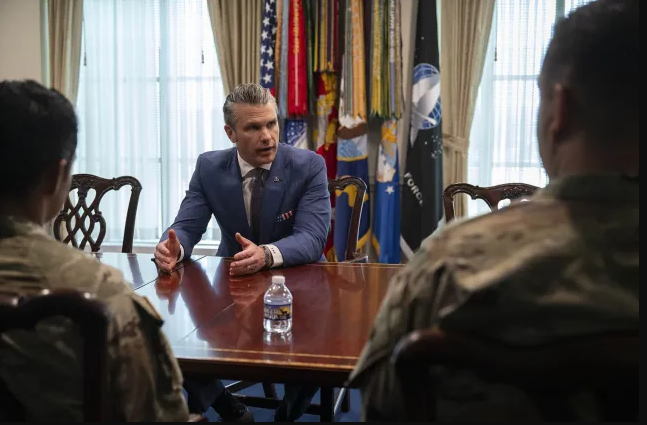

The United States Secretary of the Army has described both North Korea and China as “basic threats” to regional stability in the Indo Pacific, reaffirming Washington’s commitment to strengthening alliances and military readiness across the area.
Speaking during a high-level defense forum in Seoul, Army Secretary Christine Wormuth emphasized the growing military challenges posed by Pyongyang’s continued weapons testing and Beijing’s assertive posture in the South and East China Seas. Her comments underscore the U.S. military’s strategic pivot toward the Indo-Pacific amid rising geopolitical tensions.
“North Korea remains a dangerous and unpredictable actor, while China’s rapid military expansion and regional coercion are deeply concerning,” Wormuth said. “Together, they represent the most basic threats to peace, security, and the rules-based international order in the region.”
Reinforcing U.S. Presence
Wormuth’s visit to South Korea comes amid a series of joint U.S.-South Korean military drills, designed to enhance operational coordination and deter aggression on the Korean Peninsula. She confirmed that the U.S. Army will continue to invest in new technologies, rotational deployments, and regional partnerships to counter potential flashpoints.
The Army is also focusing on integrated air and missile defense systems, cyber capabilities, and pre-positioned logistics infrastructure to boost response times across the Indo-Pacific theater.
Stronger Alliances
In her remarks, Wormuth highlighted the importance of alliances with countries like South Korea, Japan, the Philippines, and Australia in maintaining deterrence and regional balance. She noted that the U.S. Army is exploring new training exercises and interoperability programs to deepen military ties with regional partners.
“Deterrence is strongest when it is shared,” she said. “Our partnerships here are essential to ensuring peace, even as we prepare for all contingencies.”
Rising Regional Tensions
The Army Secretary’s statements follow North Korea’s recent short-range missile launches and reports that China has increased its naval and air activities around Taiwan and the South China Sea. Both developments have drawn international concern and prompted calls for greater military coordination among U.S. allies.
Beijing has dismissed U.S. warnings as “Cold War rhetoric,” while Pyongyang accused Washington of escalating tensions through its military presence in the region.
Strategic Priorities
Wormuth reiterated that the U.S. does not seek conflict but will not hesitate to defend its interests and allies. She emphasized deterrence through strength, innovation, and cooperation.
“Our goal is to prevent conflict not provoke it,” she said. “But we must be clear-eyed about the threats we face and be ready to respond decisively.”
The Army’s posture in the Indo-Pacific is expected to remain a top priority in the coming years, with increased funding, joint exercises, and deeper regional engagement forming the backbone of U.S. strategy.
source: koreajoongangdaily.joins.com