
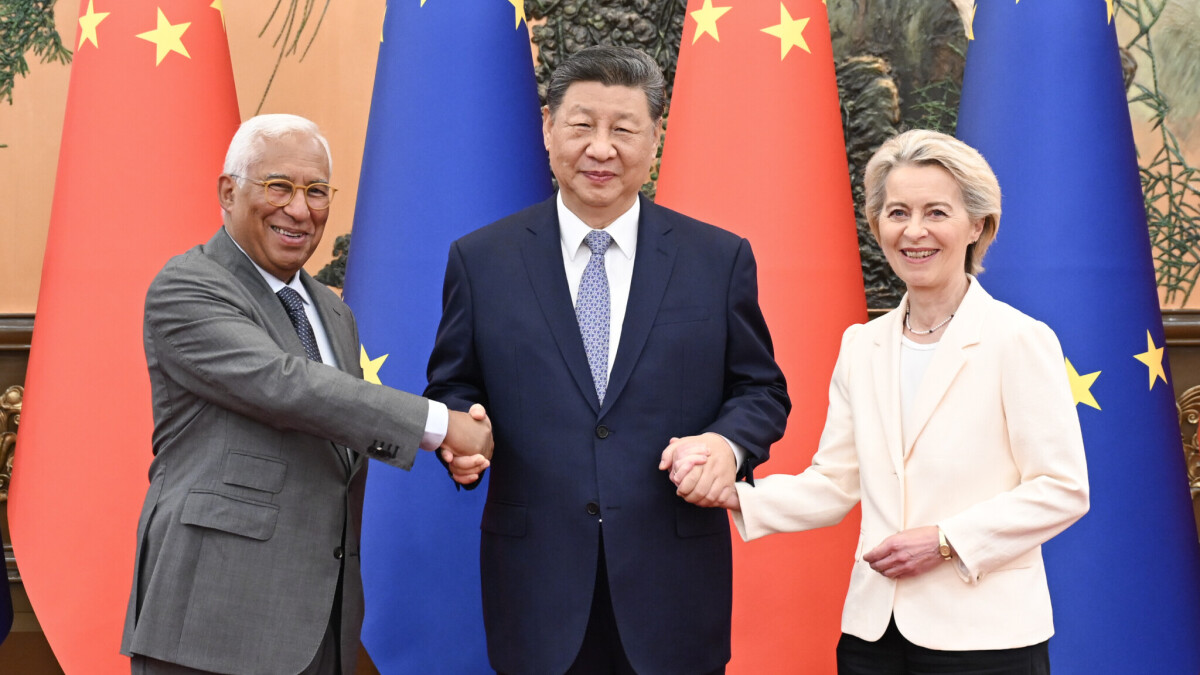

Belgian Prime Minister Bart De Wever has urged the European Union to adopt a more assertive stance against what he described as unfair trade practices by China, warning that Europe’s industrial base is increasingly under pressure.
In a letter addressed to European Commission President Ursula von der Leyen, De Wever argued that Beijing’s export-driven economic strategy is accelerating, particularly in sectors linked to the green transition, as well as chemicals and pharmaceuticals.
According to him, recent data from early 2026 shows a sharp rise in Chinese exports, with volumes increasing by about 20 percent compared to the previous year. He warned that this trend is intensifying competition and weakening European industries.
The Belgian leader also raised concerns about market access, accusing China of placing European companies at a disadvantage within its own economy. He cited issues such as forced technology transfers and alleged violations of intellectual property rights, which he said undermine fair competition.
De Wever further criticised the role of Chinese firms operating in Europe, claiming they often benefit from significant state subsidies while contributing limited value to local economies by relying heavily on imported labour.
Beyond trade imbalances, he highlighted strategic risks linked to China’s influence over global supply chains. He pointed to export restrictions on critical raw materials, which he said are increasingly used as geopolitical tools, as well as concerns over cyber activities and espionage.
He also warned that escalating tensions involving Taiwan could disrupt global semiconductor supply chains, posing a serious threat to Europe’s technology and manufacturing sectors.
Calling for a policy shift, De Wever said the EU’s current framework—which labels China as a partner, competitor and systemic rival—is no longer sufficient. He advocated a more unified and decisive approach, including stronger investigative powers for the European Commission to tackle unfair trade practices.
He also urged closer coordination among EU member states to avoid fragmented bilateral agreements and recommended reducing reliance on China by strengthening ties with partners such as the United States, Canada, Japan and India.
While acknowledging that a tougher stance could trigger retaliatory actions from Beijing, including export restrictions, De Wever insisted that the EU must be prepared to bear short-term costs to safeguard long-term economic stability.
He concluded by calling for China’s trade practices to feature prominently on the agenda of the upcoming European Council summit scheduled to take place in Cyprus in April.