
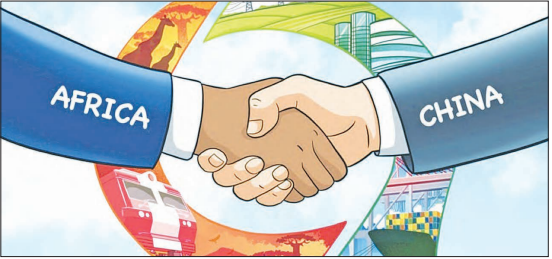

China–Africa economic and trade cooperation is increasingly shaping Africa’s industrial future, moving the continent beyond a historic dependence on raw material exports toward manufacturing, infrastructure development, technology transfer and integration into global value chains.
Since the early 2000s, what began largely as a resource-driven trade relationship has evolved into a broad, multi-layered partnership spanning infrastructure, industrial investment, manufacturing, finance and digital technology. As global economic influence shifts toward the Global South, the China–Africa partnership has emerged as one of the most consequential drivers of Africa’s development trajectory.
At the core of this transformation is the scale of economic engagement. Bilateral trade has grown at an average annual rate of about 20 per cent since the early 2000s, while Chinese foreign direct investment in Africa has expanded even faster over certain periods. China has remained Africa’s largest trading partner for more than a decade.
Recent trade figures reflect deepening interdependence. China–Africa trade reached approximately $283.5 billion in 2022, $282.1 billion in 2023, $296 billion in 2024 and surged to about $348 billion in 2025, marking the strongest expansion in recent years. The growth has been driven by rising Chinese exports alongside sustained African commodity shipments, but the structure of trade is gradually shifting toward higher-value sectors.
Industrialisation at the centre
The relationship is increasingly focused on manufacturing, agro-processing, green energy and the digital economy. This shift is significant because industrialisation requires moving up the value chain—from exporting raw materials to producing finished and semi-processed goods.
Infrastructure development has been one of the most visible pillars of China–Africa cooperation. Chinese financing institutions and construction firms have played leading roles in building roads, railways, ports, airports, power plants and industrial parks across the continent. These projects address Africa’s long-standing infrastructure deficits, which have historically constrained industrial growth.
Improved transportation networks reduce logistics costs, reliable electricity strengthens manufacturing capacity and modern ports enhance export competitiveness. Together, these developments position African economies to integrate more effectively into global production systems.
Industrial parks and value chain entry
Another key driver has been the establishment of economic and trade cooperation zones, often referred to as industrial parks. According to official data, Chinese-built industrial zones across Africa have attracted over 1,000 enterprises and generated more than 1.1 million local jobs in recent years.
Countries such as Ethiopia, Egypt and Nigeria have used these zones to develop export-oriented manufacturing sectors, particularly in textiles, footwear and light industry. Beyond job creation, these parks function as integrated ecosystems that combine production, logistics and services, helping African firms connect to global supply chains.
By participating in downstream activities such as assembly and processing, African economies are gradually shifting away from a purely upstream role in global trade.
Technology transfer and skills development
Technology transfer and human capital development are also central to the partnership. Chinese firms operating in Africa bring technical knowledge, production methods and management systems that contribute to local skill-building. The growing presence of Chinese private enterprises—now accounting for more than 70 per cent of Chinese firms investing in Africa—has further strengthened market-driven collaboration.
Educational exchanges and training programmes, including capacity-building initiatives hosted in China, have provided African officials and professionals with exposure to industrial policy frameworks and development strategies.
Diversification and resilience
China–Africa cooperation has contributed to economic diversification across the continent. While many African economies were traditionally dependent on a narrow range of commodities, investments now extend to telecommunications, renewable energy, aviation, digital services and finance.
This diversification reduces vulnerability to commodity price shocks and strengthens macroeconomic stability. Increased export capacity, particularly in processed goods, has improved foreign exchange earnings and expanded industrial output.
A major milestone in market access is China’s zero-tariff policy for African exports. Initially extended to 33 least developed African countries in December 2024, the policy is set to cover all African countries with diplomatic ties to China by 2026. It applies across sectors, including agriculture, minerals, light industry and manufacturing.
Supporting measures—such as streamlined customs procedures, digitalised rules of origin and mutual recognition of inspection standards—are designed to reduce trade barriers and facilitate smoother access to the Chinese market. Platforms like the China International Import Expo (CIIE) further promote African products within China’s vast consumer market.
Financing models evolving
Chinese lending to Africa has declined from earlier peaks, with a noticeable shift toward commercially viable, smaller-scale projects supported by foreign direct investment rather than large sovereign loans. This transition reflects a more sustainable financing approach, though it also requires African countries to strengthen regulatory environments and investment climates to attract private capital.
Integration into emerging industries
The increasing share of intermediate goods in bilateral trade indicates deeper integration into multi-stage global production networks. Meanwhile, China’s global leadership in renewable energy, digital infrastructure and advanced manufacturing opens new avenues for African participation in emerging industries, particularly within the global green economy.
As Africa positions itself for the next wave of industrial transformation, China–Africa cooperation continues to play a central role. While structural challenges remain, the partnership has significantly expanded Africa’s industrial base, strengthened its infrastructure and enhanced its integration into global value chains, marking a new phase in the continent’s economic evolution.