
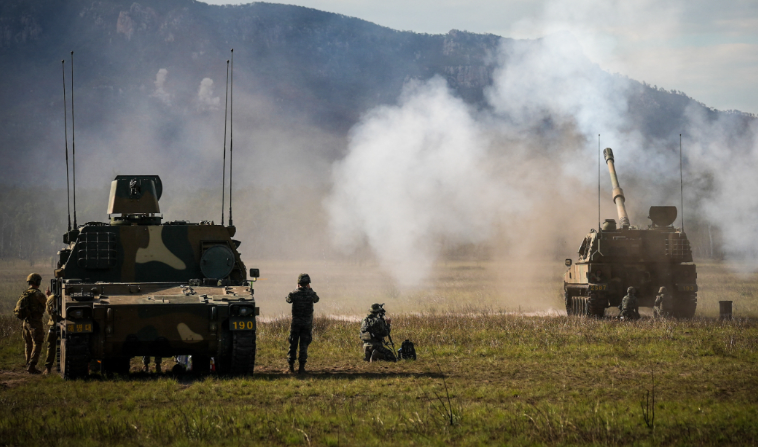

The ongoing joint military exercise between Australia and the US, involving 13 countries, has been labeled a “paper tiger” by Chinese experts. Despite its impressive scale with more than 30,000 military personnel participating, the exercise’s ability to effectively serve the US’ purposes and persuade all participants is questioned by experts.
The two-week-long military exercise, known as Talisman Sabre 2023, began on Friday, marking the largest joint exercise since 2005. It is seen as a display of force and unity in response to China’s growing assertiveness in the Indo-Pacific region.
Chinese experts, however, view the exercise as part of the US’ Indo-Pacific military encirclement of China and its preparations for future military ventures. The US is accused of exacerbating regional tensions and insecurity through such maneuvers.
The US officials’ claims of shared “core values” among allies and partners are criticized by Chinese experts as a way to coerce countries into aligning with the US’ agenda under the guise of defending security and democratic values. The US is accused of attempting to maintain global hegemony, while participating countries are believed to have their own interests and calculations.
Though Germany’s participation in the exercise has been highlighted as a symbolic move, experts question whether it will significantly support US military adventures. For Australia, its involvement is seen as a result of growing pressure from the US, putting its national interests at risk. Experts advise Australia to maintain strategic independence to safeguard its own security and development.
Japan and South Korea’s participation in the exercise is viewed as an opportunity for both countries to showcase their military industries and boost arms exports. Meanwhile, Chinese experts reject the Western hype surrounding a Chinese ship sailing off the coast of Australia, calling it baseless and asserting the right of countries to exercise freedom of navigation in international waters.
The Talisman Sabre exercise comes at a time of increased regional tensions and is closely monitored by China, which views it as part of the broader geopolitical competition in the Indo-Pacific region.