
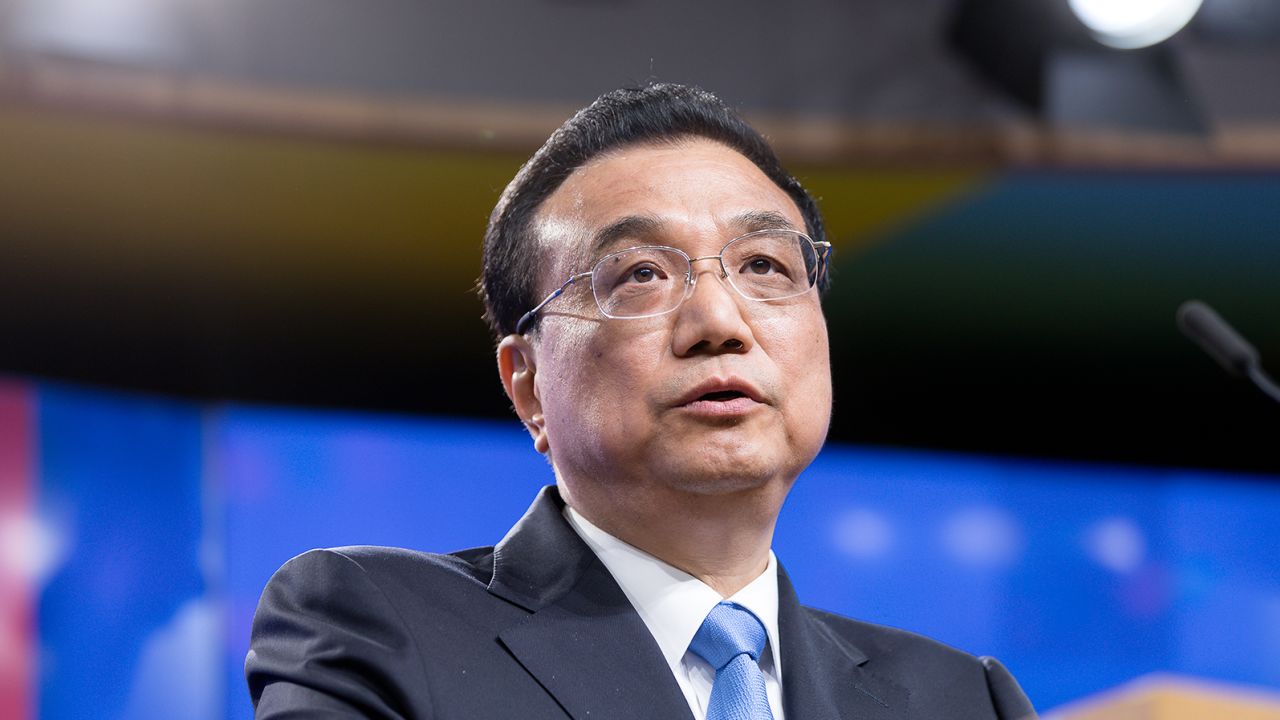

Li Keqiang, the former Premier of China, known for his reform-oriented approach and once considered a future leader of the country, has sadly passed away at the age of 68. His legacy was overshadowed by the ascension of President Xi Jinping. He suffered a heart attack on Thursday and succumbed to it just past midnight in Shanghai, as reported by the state-run news agency Xinhua.
The Chinese Foreign Ministry expressed deep sorrow at Li’s unexpected demise, with spokesperson Mao Ning announcing that an obituary would be released shortly.
During his ten-year tenure as Premier under President Xi, Li projected a more contemporary image compared to some of his more rigid counterparts. Fluent in English, he advocated for economic reforms during his term in office.
Born to a minor party official in the economically disadvantaged Anhui province, Li had endured labor in the countryside during the tumultuous Cultural Revolution from 1966 to 1976. Later, he earned a law degree from Peking University, where he embraced Western liberal political theory among his peers. However, his stance became more orthodox after he entered the ranks of officialdom in the mid-1980s, while his former classmates protested in 1989.
Li’s career advanced as he became the top Communist Party official in economically thriving Henan and Liaoning provinces. Nevertheless, his reputation was tarnished by his handling of an HIV/AIDS epidemic originating from a tainted blood donation program during his tenure as party boss in Henan.
Appointed as Premier in 2013, his efforts to address China’s profound economic challenges were hampered by President Xi’s overwhelming authority, despite once being seen as a potential rival for the country’s leadership.
Li received praise for steering the country through the global financial crisis relatively unscathed, but his time in office witnessed a shift from consensus-based rule associated with previous leaders to the more centralized power of Xi.
Experts noted that recent events indicated the primacy of raw power over institutional mechanisms in China’s political landscape.
Li’s tenure also coincided with a slowdown in China’s economic growth from the rapid expansion of the 1990s and 2000s.
While his tenure faced disruptions and challenges, Li’s intellectual commitment to China’s development remained highly regarded by experts. However, the appointment of Li Qiang, a close ally of Xi, as his successor signified a shift away from his reformist agenda as Beijing tightened its control over the economy.
In his final speech as he left office, Li expressed optimism about China’s economic recovery and its potential for further growth, despite challenges such as the COVID-induced slowdown and housing market crises.
Li Keqiang’s passing marks the end of an era, with his legacy and contributions leaving a lasting impact on China’s political and economic landscape.