
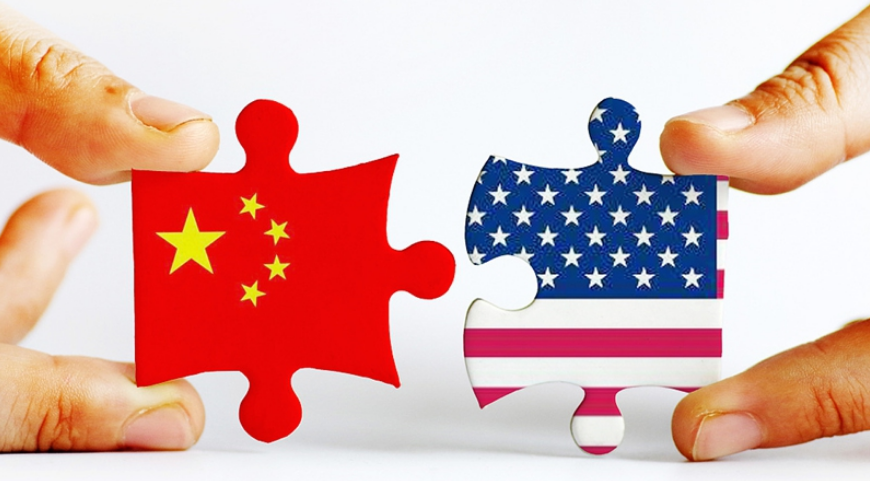

China and the US have reached a significant agreement to jointly combat global warming, as outlined in the “Sunnylands Statement on Enhancing Cooperation to Address the Climate Crisis” released by China’s Ministry of Ecology and Environment (MEE) on Wednesday. The document signals a hard-earned achievement in the ongoing thaw of tensions between the two nations.
According to the statement, the two countries have decided to operationalize the Working Group on Enhancing Climate Action in the 2020s, focusing on dialogue, cooperation, and concrete climate actions. They underscore their commitment to effectively implement the UNFCCC and the Paris Agreement, acknowledging the principles of equity and common but differentiated responsibilities.
The Working Group will concentrate on key areas of cooperation, including energy transition, methane, circular economy, resource efficiency, low-carbon and sustainable provinces or prefectures, cities, and deforestation. Both nations emphasize the critical role of COP28 in meaningfully responding to the climate crisis during this pivotal decade.
Chinese experts view this cooperation as a breakthrough, highlighting a “top-down” approach led by governments to ensure the realization of goals. The statement aligns with China’s stance on differentiated responsibilities between developed and developing countries in addressing climate change.
The MEE notes that the statement is the result of multiple meetings between China’s Special Envoy for Climate Change, Xie Zhenhua, and the US Special Presidential Envoy for Climate, John Kerry, since July. The thaw in China-US climate negotiations follows a standstill after tensions escalated with Nancy Pelosi’s visit to Taiwan last year.
Li Haidong, a professor at the China Foreign Affairs University, sees the statement as a hard-earned result not only in climate change but also a signal of warming China-US ties. While the agreement opens the door for broader international cooperation on global warming, experts caution that the US needs to demonstrate sincerity by overcoming policy flip-flopping and addressing uncertainties in its climate policies.
Li highlights the need for concrete actions from the US, including shouldering more responsibility to help developing countries adapt to global warming and removing obstacles imposed on China’s green products. The US has faced criticism for its past withdrawal from the Paris Agreement and recent efforts to impose tariffs on China’s solar panel industry, creating challenges for robust China-US climate cooperation.