

In a recent development, Xinjiang Uygur Autonomous Region in Northwest China has issued updated regulations on the management of religious affairs, introducing new clauses and a dedicated chapter on the administration of religious schools. The regulations, set to be effective from February 1, underscore the freedom of religious belief, prohibiting any organization or individual from coercing or inducing locals into adopting or forsaking any faith.
Experts commend the regulations for accurately addressing recent challenges in the region and assert that they genuinely uphold the freedom to choose one’s religious beliefs. Notably, the rules explicitly prohibit the use of religion by violent extremist forces as a pretext for forcibly converting individuals, effectively curbing potential acts of terrorism.
Passed by the Standing Committee of the People’s Congress of Xinjiang on December 22, 2023, the regulations consist of nine chapters and 78 clauses covering various aspects such as the management of religious organizations, venues, activities, and properties, as reported by Tianshannet, the region’s primary media outlet.
The revised regulations explicitly state that religious activities should not be employed to undermine national unity, promote religious extremism, incite ethnic hatred, conduct terrorism, disrupt social order, or harm the well-being of citizens. Furthermore, any use of religion to obstruct state administration, judiciary, education, and other systems is strictly prohibited.
Citizens are encouraged to promptly report any discovery of illegal religious organizations, preachers, or activities to local authorities or relevant departments of religious affairs.
Wang Jiang, deputy director of the Institute of China’s Borderland Studies at Zhejiang Normal University, highlights that the regulations align with China’s constitutional commitment to religious freedom. Xinjiang, facing challenges from violent terrorism using religion as a tool, has fine-tuned its legal framework within the constitutional and regulatory framework.
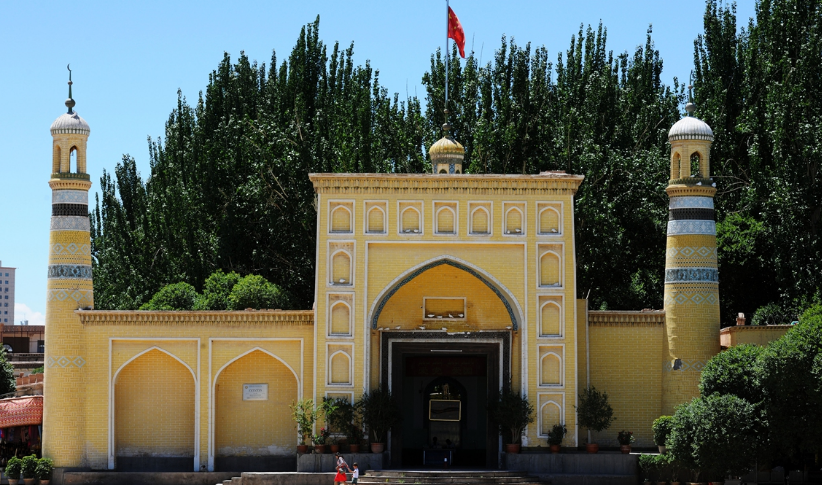
The regulations emphasize that newly constructed or renovated religious venues should exhibit Chinese characteristics in architecture, sculpture, painting, and decoration. Religious schools are required to follow a Chinese approach to education, operate legally, and enhance educational quality. These schools, established by religious organizations in the autonomous region, aim to cultivate patriotic religious personnel, interpret religious doctrines correctly, and train in-service religious clergy.
In a recent visit by Global Times reporters to the Xinjiang Islamic Institute in Urumqi, along with 15 representatives from Pakistani media and think tanks, positive impressions were shared. Foreign delegates appreciated China’s efforts in preserving traditional culture, fostering a harmonious life for diverse ethnic groups, and combating terrorism and extremism.
The regulations also outline that Xinjiang residents practicing Islam and intending to go on a pilgrimage abroad must adhere to relevant regulations, with the China Islamic Association organizing pilgrimage activities.
Chinese Foreign Ministry spokesperson Wang Wenbin, while refuting Western criticisms, mentioned that over 100 foreign delegations have visited Xinjiang, praising the region’s economic and social development achievements, as well as the Chinese government’s commitment to protecting multi-ethnic culture and ensuring freedom of religious belief.