

China’s Ministry of State Security (MSS) revealed on Saturday that several foreign entities have been enticing domestic aviation enthusiasts with promises of free equipment and aviation information sharing to recruit “volunteers.” These individuals were subsequently engaged in the illegal collection and transmission of flight data from Chinese aircraft to foreign countries. In response, national security agencies, in collaboration with relevant departments, conducted a nationwide special operation, resulting in the confiscation of hundreds of deployed devices and the initiation of legal actions against those involved.
According to an MSS article released through its WeChat account, foreign organizations have been active on major Chinese online platforms, including Weibo, Tieba, forums, QQ groups, and video websites. Over an extended period, they identified active accounts of aviation enthusiasts and recruited them through personalized advertisements via emails, text messages, and other channels.
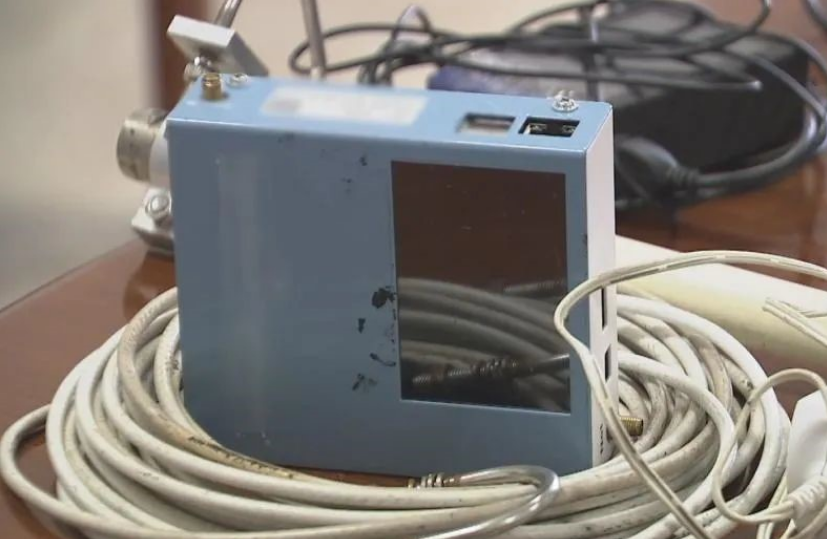
Taking advantage of the enthusiasm and curiosity of aviation enthusiasts, these foreign organizations lured recruits with the promise of free equipment and aviation information. The organizations then distributed portable signal receiving devices, similar in size to ordinary smartphones, to the newly recruited “volunteers” through international express delivery.
The volunteers were instructed to place these devices near aviation hubs within China, collecting information such as aircraft models, altitudes, longitudes, latitudes, speeds, and headings within a specified range. The collected data was transmitted in real-time to servers designated by these foreign organizations.
The MSS revealed that these foreign entities had deployed a considerable number of devices in provinces surrounding the Bohai Sea, East China Sea, and South China Sea. The illicit activities extended beyond stealing civil aviation data to include sensitive information about military aircraft and other aircraft. The devices supported remote online programming, personalized functions, and featured built-in GPS chips, facilitating the rapid transmission of sensitive data to foreign servers through encrypted methods.
Each device was estimated to send flight data for approximately 1,000 aircraft and around 130,000 location data points daily. With a coverage radius of 300 to 400 kilometers, deploying only about 300 devices could monitor and cover flight data for all aircraft in Chinese airspace.
Furthermore, the MSS warned that the large-scale operation of illegal devices could cause signal interference to civil aviation and military air traffic control systems, posing a significant threat to aviation safety.
In response to this espionage threat, national security agencies, alongside relevant departments, executed a nationwide special operation, resulting in the confiscation of hundreds of deployed devices and legal actions against the involved individuals.
The MSS emphasized that, according to China’s Counter-Espionage Law and the Law on Data Security, both overseas and domestic entities engaging in espionage-related activities or illegal data collection methods are subject to legal consequences. The MSS called on citizens to report any illegal activities or suspicious situations that may compromise national security promptly through designated reporting channels.