
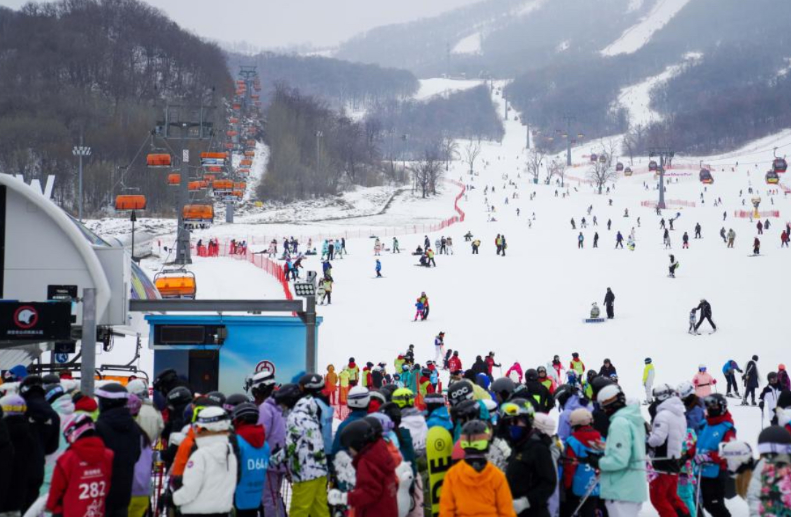

China’s tourism surge, extending beyond the New Year’s Day holidays, continues to captivate both domestic and international attention. The recent scenes of tourists engaging in ice and snow activities in Harbin, Heilongjiang Province, and enjoying sunshine in Hainan Province highlight the vitality of China’s tourism market. The tourism boom is not limited to specific regions, as areas including Xinjiang also witness robust growth in tourist numbers and revenues. Experts predict that the trend will persist through the upcoming Chinese Lunar New Year holidays, approximately a month away, contributing to the broader economic recovery in 2024.
The ongoing International Ice and Snow Festival in Harbin, which commenced on Friday, garnered immense interest, particularly after the city’s winter tourism surge during the New Year’s Day holidays. The festival coincides with the China-France Year of Culture and Tourism, declared by the Ministry of Culture and Tourism. Social media platforms have been buzzing with videos of tourists participating in winter activities, reflecting the festival’s popularity.
While precise attendance figures for the festival are pending, Harbin recorded historical highs during the New Year’s Day holidays, with approximately 3.05 million tourist trips and a total tourism revenue of about 5.91 billion yuan ($832 million), according to local data.
Xinjiang, renowned for its natural beauty and rich culture, also experienced remarkable growth during the New Year’s Day holidays, with over 1.66 million trips and tourism revenue reaching about 1.76 billion yuan, marking a 195 percent and 424.3 percent year-on-year increase, respectively.
Hainan, known for its warm winter climate, reported over 60 percent growth in both trip numbers and tourism revenue during the same holiday period. Additionally, early bookings for Hainan’s Lunar New Year holidays are already showing promising signs.
Experts view the tourism boom as indicative of China’s robust consumption market, emphasizing its potential to fuel the overall economic recovery in 2024. However, they stress the need for additional policy measures to address challenges and pressures.
The positive impact of the tourism surge extends beyond visitor experiences, translating into increased spending and business activity for companies across various sectors. Notably, the surge in Harbin’s popularity led to a more than 51 percent surge in share prices for Changbai Mountain Tourism Co, based in Jilin Province.
China’s winter tourism market is witnessing substantial growth, fueled by the success of the Beijing Winter Olympics in 2022. The China Tourism Academy predicts that the 2024-2025 ice and snow season will see a total of 520 million trips and revenue reaching 720 billion yuan.
Economists, including Cao Heping from Peking University, have observed a robust recovery in the tourism industry, signaling positive trends for China’s economic recovery in 2024. Forecasts suggest that China’s GDP growth target for 2024 should not be lower than 5 percent. Policymakers are urged to intensify efforts in areas such as income increase, monetary policy support, and backing new technologies and emerging industries to ensure a sustained economic recovery.