
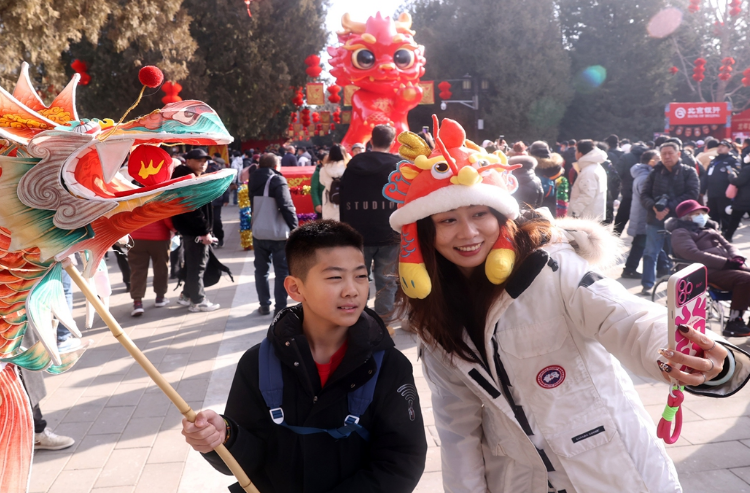

Traditional temple fairs in Beijing witnessed a triumphant comeback this Spring Festival, marking a revival after a four-year hiatus due to the pandemic. The Global Times reporters, present at the temple fair during the holiday, were impressed by its immense popularity and vibrant festival atmosphere.
On the second day of the Chinese Lunar New Year, February 11, a Global Times reporter observed lively crowds of tourists gathered at the entrance of Beijing’s Ditan Park (the Temple of Earth). This day marked the commencement of the 36th Ditan Spring Festival cultural temple fair, signaling the much-anticipated return of the event.
The Ditan Park temple fair showcased four performances, five thematic photo exhibitions, five interactive experiences, and two charity events, with a primary focus on preserving traditions and immersing participants in folk customs.
Streets and alleys adorned with colorful lights, bustling temple fairs in parks, and innovative ideas in major business districts created a rich tapestry of Spring Festival cultural activities in Beijing. Despite the festive atmosphere, the reopening of the temple fair added considerable traffic pressure to the roads, with long queues for tickets and crowded areas. However, visitors expressed their joy at the resurgence of the “old Beijing” and the traditional cultural activities.
The fair featured trendy novelties like handmade lanterns, dragon-themed hats, and vibrant dragon-themed dance performances. Additionally, intangible cultural heritage products exuded a rich traditional flavor, creating a strong cultural atmosphere. The amusement area offered various interactive games, enhancing the festive experience for visitors.
Foreigners were also spotted enjoying the temple fair, taking home dragon-shaped hats as souvenirs.
At Fangze Altar in the park, a well-preserved structure for worshipping the God of the Earth, the audience eagerly awaited a grand performance resembling Qing Dynasty rituals. Visitors from afar came not only to experience the traditional Lunar New Year atmosphere of old Beijing but also to connect with the profound affection ancient people had for the land and their reverence for ritual culture.
A similar popularity was witnessed at the Longtan temple fair on February 16. Despite being the last day of the fair, visitors continued to arrive in an endless stream. The fair showcased the integration of traditional folk culture and trendy culture, featuring traditional crafts alongside new activities like e-sports.
Traditional Beijing snacks, especially fried sausage, drew long queues, with some snacks selling out due to their popularity.
The return of traditional temple fairs during the Spring Festival holidays contributed to a surge in popularity in the tourism market, surpassing previous records. Longtan temple fair attracted over 140,000 visitors on the first day of the Chinese Lunar New Year, while the Ditan Park temple fair welcomed more than 220,000 visitors on the second day. Throughout the holidays, these park fairs collectively welcomed 5.164 million visitors.
At Baiyun (White Cloud) Temple, a major Taoist temple, visitors participated in traditional rituals, such as touching the stone monkey and tossing coins from the Wofeng Bridge, believed to bring blessings and ward off disasters. The enduring charm of traditional culture and the capital’s growing vitality were evident, reflecting the public’s confidence in a better future.