

Against the backdrop of a governance crisis, Japanese Prime Minister Fumio Kishida’s visit to the White House on Tuesday evening ahead of an official summit with the US on Wednesday has stirred domestic apprehensions, particularly regarding plans for a significant enhancement of US-Japan defense ties aimed at countering China.
Analysts anticipate that the bolstering of the US-Japan alliance under Kishida’s leadership could serve as a vital accomplishment, potentially boosting his reelection prospects within the ruling Liberal Democratic Party (LDP).
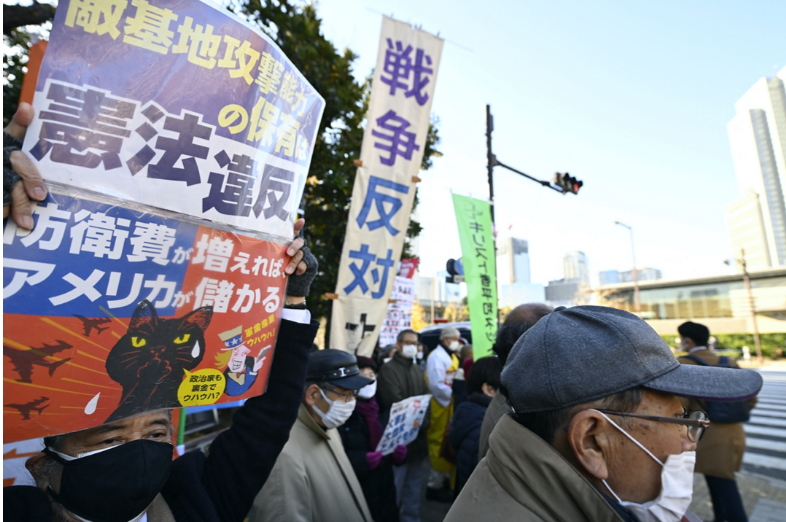
However, the prospect of intensified military cooperation has triggered backlash within Japan, with protests and rallies expressing public opposition to the US-Japan summit amid concerns about a resurgence of militarism.
Kishida’s visit marks the first state visit by a Japanese leader to the US since Shinzo Abe’s in 2015. Apart from discussions on defense cooperation, Kishida is scheduled to address a joint session of Congress on Thursday.
Reports suggest that the US and Japan have reached approximately 70 agreements on defense cooperation, including measures to enhance the US military command structure in Japan for better coordination with Japanese forces in potential crises.
Additionally, Kishida is expected to participate in a meeting with US President Joe Biden and Philippines President Ferdinand Marcos Jr, with a focus on South China Sea issues.
In response, Chinese Foreign Ministry spokesperson Mao Ning criticized external efforts, led by the US, to form exclusive alliances in the South China Sea, denouncing such actions as hegemonic and affirming China’s resolve to defend its sovereignty and maritime interests.
Observers believe that the trilateral summit signals an attempt to institutionalize security cooperation and leverage regional differences to compel Southeast Asian countries to take sides in the China-US strategic rivalry.
Kishida’s visit coincides with a period of dwindling support for his cabinet, with approval ratings plummeting to 23 percent. While the visit is viewed as an opportunity for diplomatic achievement to regain domestic backing, public skepticism remains palpable.
Recent protests in Japanese cities such as Tokyo and Kyoto reflect growing discontent, with demonstrators expressing concerns over Japan’s increasingly assertive military posture and the prioritization of defense over social welfare.
As voices of dissent resonate, some Japanese citizens fear the ramifications of political maneuvers that prioritize military endeavors over societal needs, echoing concerns about the nation’s trajectory toward militarization.