
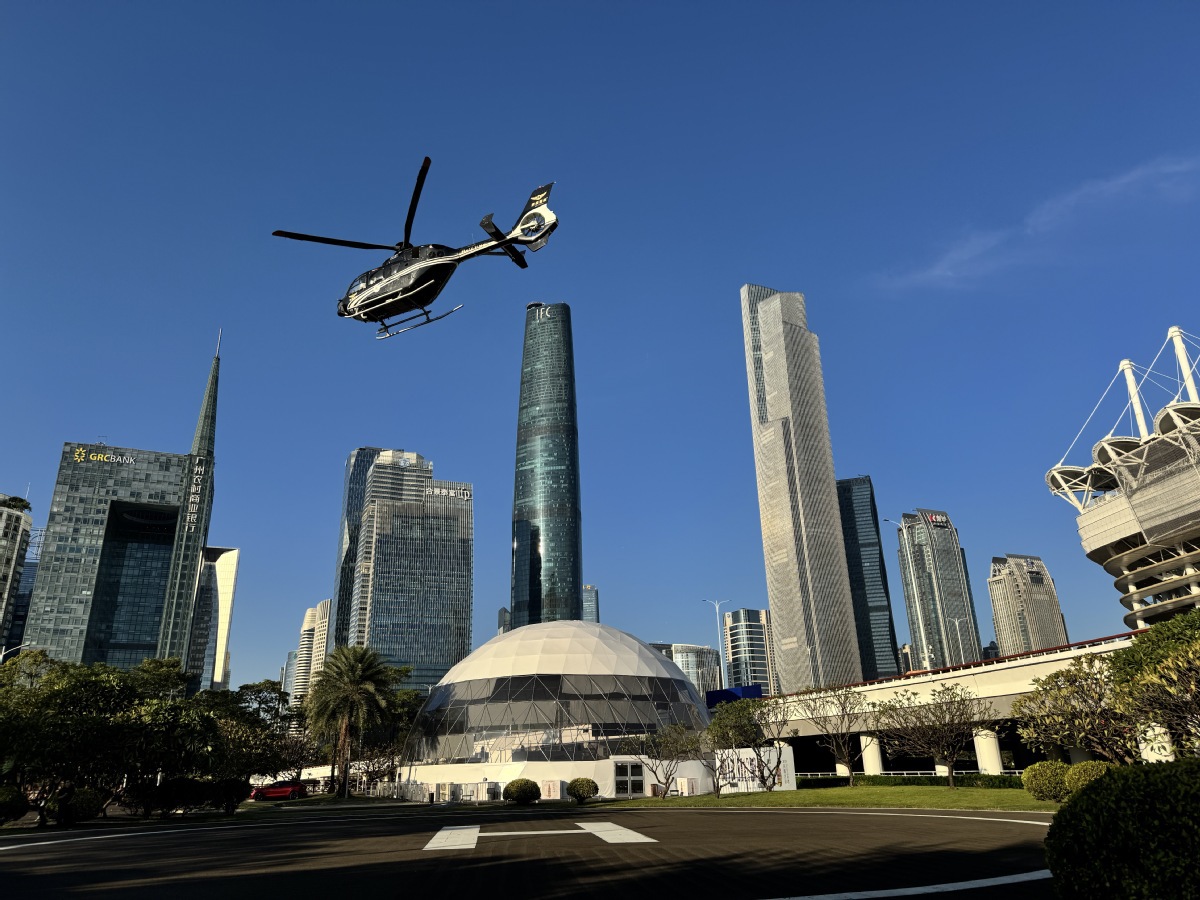

China’s low-altitude economy is experiencing rapid growth, with low-altitude tourism and air taxi services becoming increasingly popular among travelers. In recent years, the country has witnessed a surge in helicopter sightseeing trips, offering tourists unique perspectives of iconic sites like the Great Wall in Mutianyu and the Atlantis Sanya Hotel in Hainan.
Low-altitude tourism has captured the attention of Chinese consumers, who are seeking new and thrilling travel experiences. Helicopter trips, such as the newly launched 10- to 15-minute rides at Mutianyu, allow visitors to enjoy breathtaking views of the Great Wall. Each helicopter accommodates three passengers and a pilot, providing an intimate and exciting way to experience the scenic area.
In addition to sightseeing, air taxi services are also gaining traction in China. The country recently launched its first cross-provincial low-altitude passenger transport route between Shanghai Pudong International Airport and Kunshan City, reducing a typical 70-minute land journey to just 28 minutes. Operated by Shanghai Newsky Helicopter Co., the service runs twice a day during peak hours, with a one-way flight priced at 1,600 yuan ($221) per person.
Shanghai is positioning itself as a leader in the low-altitude sector, aiming to become one of China’s first inter-provincial navigable cities for low-altitude travel. The city is working to develop a comprehensive low-altitude industry by 2027, including R&D, manufacturing, and commercial applications, with projected sales exceeding 50 billion yuan.
The low-altitude economy in China is poised for further expansion, driven by favorable policies and technological advancements. Experts predict that China will soon lead the world in creating a comprehensive low-altitude development system, boosting the nation’s competitiveness in the sector.