
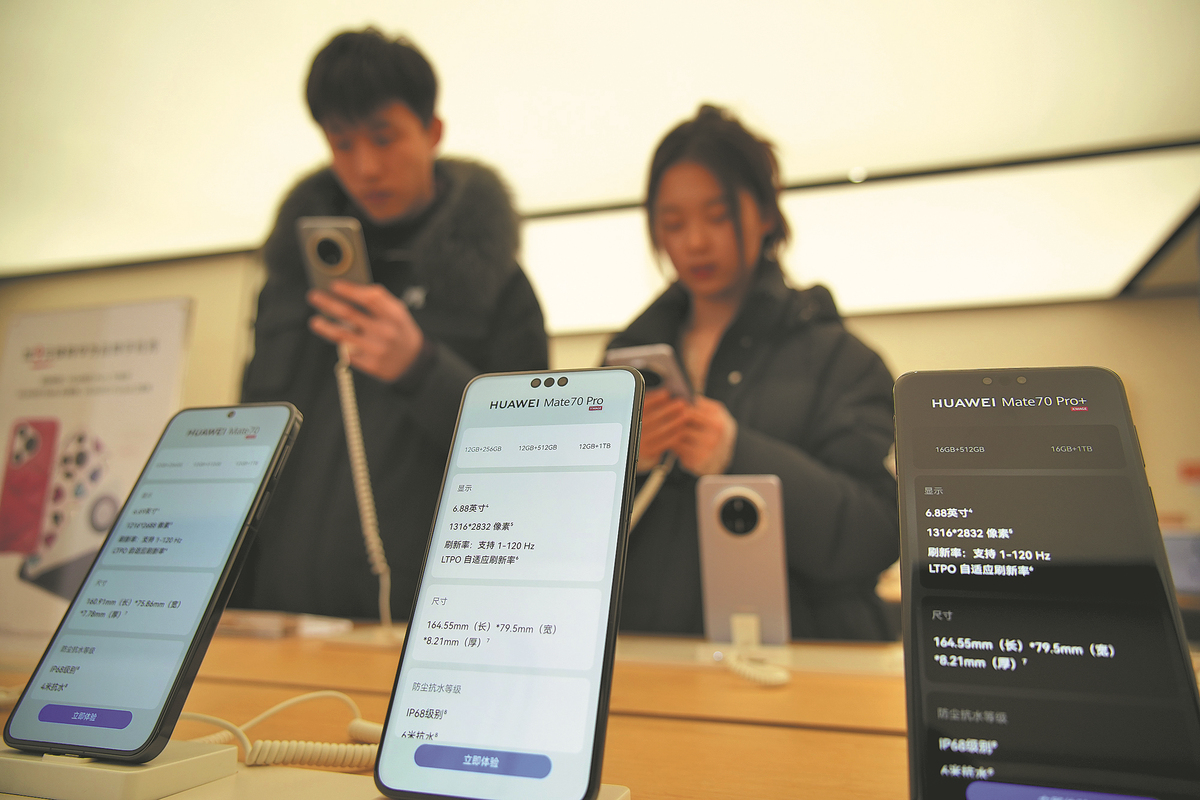

Huawei Technologies Co. unveiled its much-anticipated Mate 70 smartphone series on Tuesday, calling it the “most powerful Mate ever,” signaling a major leap forward in the premium handset market. The new series is poised to directly challenge competitors like Apple, particularly in the AI-enabled features and operating systems space.
The Mate 70 series introduces a range of advanced functionalities, including enhanced photography, AI-driven gesture controls, and live transcription capabilities. A key feature of the launch is the debut of Huawei’s HarmonyOS NEXT, an entirely homegrown operating system that eliminates ties to Android. This new OS not only powers the Mate 70 but also enables seamless connectivity with a broader ecosystem of products, such as electric cars and smartwatches.
Huawei’s executive director, Yu Chengdong, emphasized that the Mate 70 series is the “smartest” flagship the company has ever produced. The series includes several models, with prices starting at 5,499 yuan ($758) for the base Mate 70 model, rising to 11,999 yuan for the high-end Mate 70 RS. The new devices have already garnered significant interest, with more than 3 million preorders registered on Huawei’s official website.
Industry experts are hailing the launch as a major breakthrough for Chinese smartphones, noting that the series’ chips and its integration with HarmonyOS NEXT represent significant advancements in the sector. Xiang Ligang, director-general of the Zhongguancun Modern Information Consumer Application Industry Technology Alliance, pointed out that Huawei’s success in developing high-performance chips and applications fully supported by its own operating system sets it apart from competitors.
The launch of the Mate 70 series builds on the success of the Mate 60 series, which was unveiled in August 2023 and featured a chip developed entirely in China. While Huawei did not disclose detailed specifications for the chips in the Mate 70 series, industry insiders are confident in the company’s ongoing innovations.
Xiang Ligang emphasized that despite external pressures, particularly from the U.S. government’s efforts to limit China’s technological rise, Huawei continues to make groundbreaking achievements. He argued that such efforts are counterproductive and will only accelerate China’s drive for self-reliance in technology. The continued success of Huawei in the face of these challenges is seen as a testament to China’s growing technological capabilities and its push for independent innovation in the global market.