
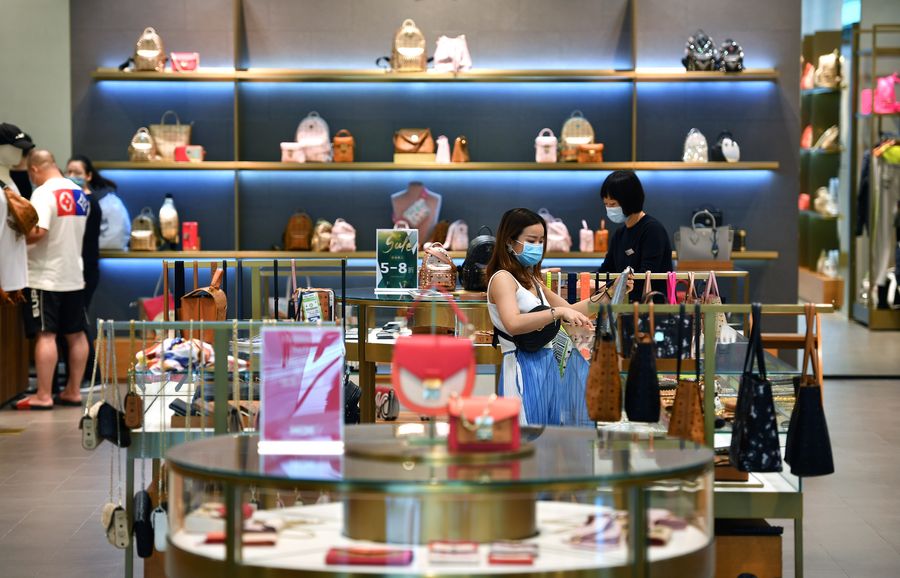

China is planning to increase the share of consumption in its GDP to more than 50% within the next decade as part of its strategy to shift the country’s economic growth drivers. This shift is seen as essential in light of challenges stemming from the ongoing adjustments in the property sector and growing concerns over slowing global trade, according to Zhu Min, a former deputy managing director of the International Monetary Fund (IMF) and former deputy governor of the People’s Bank of China.
Zhu highlighted that the Chinese economy faces significant external and internal challenges, including sluggish global economic growth, a decline in world trade, an oversupply in the real estate sector, and growing local government debt issues. One of the key concerns is the potential impact of rising tariffs, especially from the United States under its trade policies, which could reduce the share of global trade in the world’s GDP. Zhu specifically pointed to the risk that global trade could shrink by approximately 3% over the next three years due to actions like US tariffs, including 25% tariffs on products from Mexico and Canada and an additional 10% on Chinese goods.
Zhu expressed concern that such tariffs could ultimately lead to a situation of economic decoupling between the US and China, a scenario in which trade, capital flows, and technology transfers would be heavily disrupted. He warned that this decoupling could lead to political tensions and create substantial uncertainties for global markets, emphasizing the importance of avoiding such a split. Chinese Premier Li Qiang also stressed the need to oppose decoupling and ensure the stability of global industrial and supply chains.
In response to these challenges, Zhu pointed out that China is focused on diversifying its growth engines away from traditional drivers like infrastructure investment, real estate, and exports. The country is now looking to consumption as the main pillar of future growth, aiming to boost the share of consumption in GDP from 48% to 58% over the next decade. While acknowledging the difficulty of this goal, Zhu emphasized that the Chinese government is committed to increasing income growth, particularly by focusing on reforms in the services sector. This sector is seen as the next big opportunity for both foreign investments and domestic companies, especially as China shifts from a manufacturing-heavy economy to one that is more service-oriented.
Zhu also mentioned that China’s recent stimulus measures are already showing positive effects, particularly in supporting infrastructure investment and real estate projects. He expects further fiscal stimulus, including 2 trillion yuan for local infrastructure projects and 2.5 trillion yuan in monetary support for completing unfinished real estate developments.
In summary, China’s economic strategy is aimed at making consumption the central engine of growth, ensuring that income growth outpaces GDP growth, and transitioning towards a more diversified and modern economy that can weather global challenges like tariff-induced trade slowdowns.