
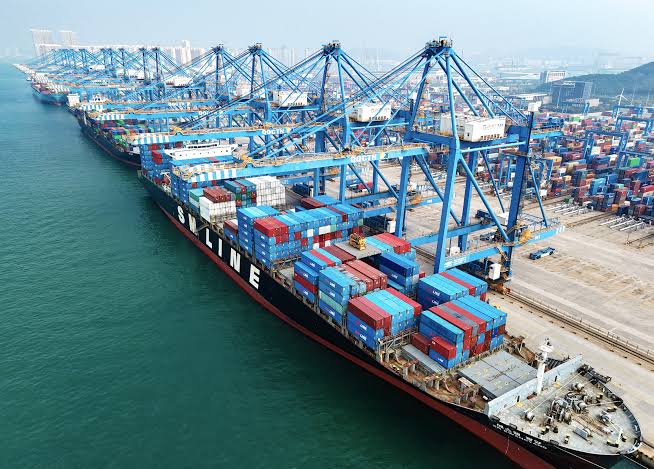

In a strategic move to strengthen its influence in Central America and counter China’s growing economic footprint in the region, the United States has pledged significant support for the modernization of Guatemala’s Pacific port, Puerto Quetzal. The project is part of a broader initiative to enhance trade and infrastructure ties between the U.S. and Latin America, ensuring that American companies maintain a competitive edge in the region amid China’s increasing investments.
The U.S. government has announced a $200 million financing package aimed at upgrading Puerto Quetzal’s infrastructure, improving its cargo handling capacity, and enhancing its overall logistical efficiency. This investment will facilitate the port’s transformation into a state-of-the-art logistics hub, capable of accommodating larger vessels and handling more diverse cargo. The upgrades are expected to attract global trade and reinforce Guatemala’s position as a critical transit point for goods moving between the Americas, Asia, and Europe.
“The United States is committed to strengthening its partnerships across the Western Hemisphere, and our support for the modernization of Puerto Quetzal reflects that commitment,” said U.S. Secretary of State Antony Blinken during a press briefing. “By investing in vital infrastructure, we are not only supporting Guatemala’s economic growth but also ensuring that the region’s ports remain competitive on the global stage.”
Puerto Quetzal, located on the Pacific coast, has long been a key port for Guatemala, handling a significant portion of the country’s imports and exports. However, the port’s infrastructure has struggled to keep pace with the rapidly evolving demands of global shipping. The modernization efforts, expected to take several years, will focus on expanding container terminals, upgrading cargo handling systems, and improving connectivity to key inland transportation routes.
The timing of the U.S. commitment to Puerto Quetzal is seen as a direct response to China’s growing presence in Latin American infrastructure projects. Over the past decade, China has expanded its reach in the region through investments and partnerships, particularly in port facilities and the Belt and Road Initiative (BRI). In neighboring countries like Panama and Ecuador, China has funded massive port expansions that have allowed Chinese companies to increase their foothold in the region.
Guatemala, which is strategically located as a transit hub between North and South America, has become a critical focal point in this geopolitical competition. With China’s influence steadily growing, the U.S. has sought to reinforce its position by offering tangible economic support and opportunities for growth.
In a statement, Guatemalan President Alejandro Giammattei expressed his gratitude for the U.S. backing, calling it a “win-win” for both countries. “This partnership not only strengthens our relationship with the United States but also positions Guatemala as a key player in the global supply chain,” Giammattei remarked. “We look forward to working closely with the U.S. to bring this ambitious project to life.”
The modernization project also aligns with U.S. interests in regional security and economic stability. By improving the port’s capabilities, the U.S. aims to increase the flow of American goods to the region and create new opportunities for trade. It is anticipated that the upgraded port will provide a more secure, efficient, and transparent environment for international shipping, which could also encourage greater foreign investment in the region.
As the competition for influence in Latin America intensifies, the U.S. is positioning itself as a reliable partner for countries seeking to modernize their infrastructure without becoming overly dependent on China. With Puerto Quetzal as the latest focal point, the U.S. is signaling its intention to maintain its strategic presence in the region, balancing China’s expansion with a strong commitment to fostering sustainable, transparent development in Latin America.