
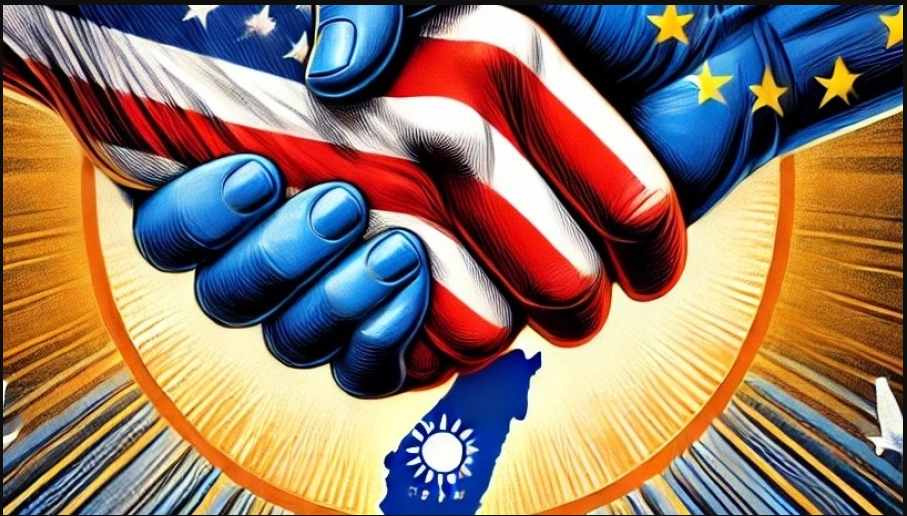

In a powerful display of unity, the United States and the European Parliament have reaffirmed their unwavering support for Taiwan as China escalates its military presence in the region. The joint declaration comes as Beijing’s increasing pressure on the democratic island has raised alarms across the international community, with experts warning of a potential crisis in the Taiwan Strait.
The US State Department issued a statement on Monday, condemning China’s “aggressive actions” and reaffirming its commitment to Taiwan’s security under the Taiwan Relations Act. This long-standing policy provides for military assistance and support to Taiwan in the event of an armed conflict. U.S. President Biden’s administration emphasized its continued diplomatic efforts to deter Chinese expansionism, urging China to respect the status quo of cross-strait relations.
In parallel, the European Parliament took an unprecedented step, passing a resolution that expressed “deep concern” over China’s military buildup near Taiwan and its threats to regional stability. The resolution, backed by a broad coalition of lawmakers, includes calls for increased diplomatic and economic support for Taiwan, as well as a stronger European presence in the Indo-Pacific.
European Parliament President Roberta Metsola described the resolution as a “strong and united message” to Beijing. “Taiwan’s security is of paramount importance to Europe, and we stand in solidarity with its people in the face of growing threats from authoritarian regimes,” Metsola stated. “The European Union must not turn a blind eye to aggression that challenges democratic values.”
China has consistently opposed foreign interference in its claimed territory, repeatedly warning Western nations against “playing with fire” over Taiwan. Beijing’s rhetoric has become more pointed in recent weeks as military drills and incursions into Taiwan’s airspace have intensified. On Tuesday, Chinese warplanes entered Taiwan’s Air Defense Identification Zone (ADIZ), prompting swift responses from the island’s military.
Taiwan’s government, led by President Tsai Ing-wen, has expressed gratitude for the international support, but it remains vigilant, preparing its forces for any potential escalation. “We are grateful for the commitment of our international allies, but Taiwan will continue to strengthen its defense capabilities and work closely with like-minded democracies to safeguard peace and stability in the region,” Tsai said in a statement.
In Washington, lawmakers from both parties have voiced their support for Taiwan. Republican and Democratic leaders have agreed that increased military and economic ties between the US and Taiwan are essential in countering China’s growing influence. Senator Marco Rubio, a leading voice on foreign policy, called for a “comprehensive strategy” that includes strengthening Taiwan’s defense capabilities, enhancing trade relations, and reinforcing global diplomatic efforts to isolate Beijing’s increasingly aggressive actions.
The international community has been closely monitoring the situation as tensions rise. The US, Japan, Australia, and other regional allies have called for greater multilateral cooperation to uphold regional security. The United Nations has also been urged to take a stronger stance on the issue, though China’s veto power on the Security Council remains a significant obstacle to any meaningful resolution.
Experts warn that while diplomatic measures are crucial, they may not be enough to deter Beijing from further escalation. “China views Taiwan as a core national interest, and it is unlikely to back down under international pressure,” said Dr. Mei Li, a professor of international relations at the University of Hong Kong. “The situation is growing more precarious, and both sides are preparing for a long-term standoff.”
As the geopolitical chess game continues, Taiwan’s fate remains uncertain. However, the resounding support from the United States and European Parliament sends a clear signal that the democratic world is committed to standing with Taiwan in the face of rising authoritarianism. The coming months may prove pivotal in shaping the future of cross-strait relations and global security in the Indo-Pacific.
source: inellinews.com