
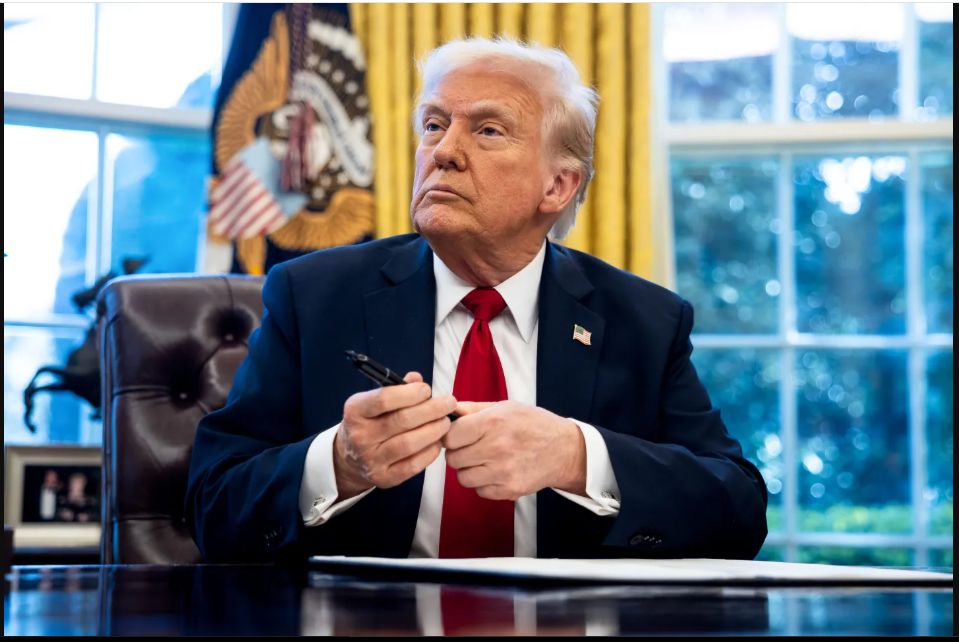

Former President Donald Trump has reignited the ongoing debate over U.S.-China trade relations with a provocative suggestion that could reshape the future of the popular social media platform, TikTok. In recent remarks, Trump proposed the possibility of reducing tariffs on Chinese imports as part of a broader strategy to resolve the dispute surrounding TikTok’s operations in the U.S. The idea has sent ripples through political and business circles, with implications that stretch far beyond the app itself.
TikTok, which is owned by Chinese company ByteDance, has faced increasing scrutiny from the U.S. government due to concerns over data security and national security risks. At the heart of the controversy is the fear that the app could be used by the Chinese government to collect and misuse personal data from American users, a concern that has led to potential bans, legal challenges, and intense negotiations between U.S. officials and ByteDance.
In a recent statement, Trump suggested that reducing the current tariffs on Chinese goods could facilitate a deal that would allow TikTok to continue its operations in the U.S. “If it helps get a deal done with TikTok, maybe it’s something to consider,” Trump said during a public appearance. His comments reflect the high-stakes nature of the negotiations, where tariffs, national security, and economic interests are all at play.
The proposal to ease tariffs is particularly significant because it comes after a years-long trade war between the U.S. and China, during which tariffs were imposed on billions of dollars worth of goods. These tariffs were seen as a major point of tension, with both nations imposing retaliatory duties on each other’s products. Trump’s suggestion to reduce tariffs is being viewed as an attempt to de-escalate these tensions while simultaneously resolving the TikTok issue.
The idea of using tariff reductions as leverage in the TikTok negotiations has received mixed reactions. Supporters of the move argue that easing trade tensions could have positive effects on U.S. consumers and companies, many of which rely on Chinese-made products. For example, lower tariffs could reduce prices on goods ranging from electronics to consumer goods, potentially benefiting American businesses and households.
However, critics have raised concerns about the broader implications of such a move. Some fear that cutting tariffs could signal weakness in future trade negotiations and undermine efforts to address China’s broader trade practices, including intellectual property theft and unfair competition. Additionally, national security hawks have warned that easing tariffs in exchange for TikTok’s continued operation might not be a wise tradeoff, especially if it involves compromising on security concerns related to the app’s data practices.
The fate of TikTok has become a major point of contention in U.S.-China relations, with both sides digging in their heels over the issue. For TikTok’s 100 million American users, the uncertainty surrounding the app’s future continues to grow as talks between U.S. officials and ByteDance evolve. While Trump’s suggestion to cut tariffs offers a potential avenue for resolution, it remains unclear whether it will gain traction among lawmakers or whether it will further complicate the negotiations.
As the TikTok saga continues to unfold, it is evident that the app’s future is not only about the technology or its user base but is also deeply intertwined with the broader geopolitical dynamics between the U.S. and China. Trump’s proposed tariff reduction introduces a new element to an already complex situation, and its potential impact could be felt for years to come. Whether the TikTok issue will be resolved through trade concessions or whether further tensions will arise remains to be seen, but one thing is clear: the stakes are high.
source: fortune.com