
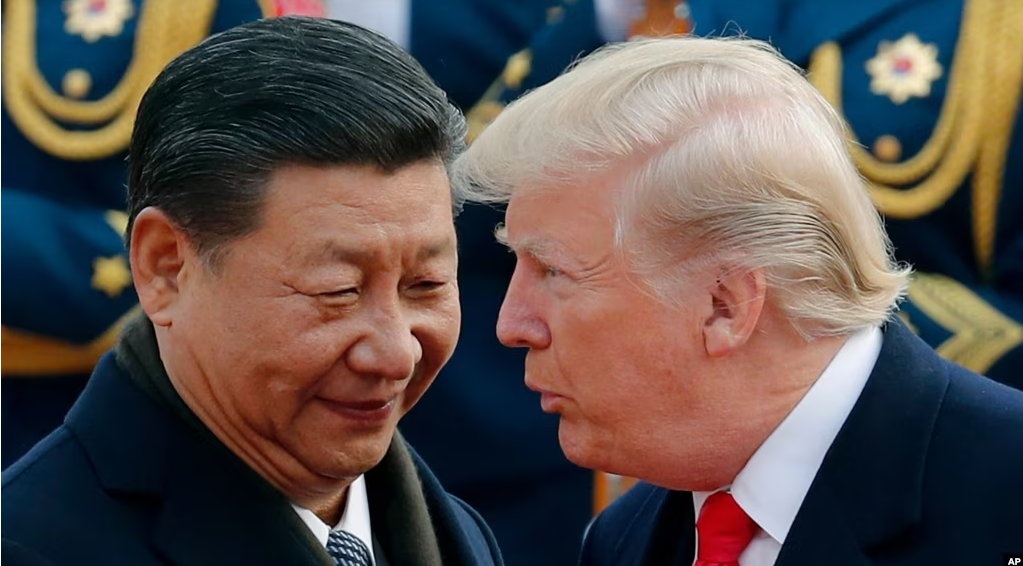

Former U.S. President Donald Trump is turning his attention to Africa, signaling a renewed focus on the continent as a strategic battleground in the ongoing competition with China. As he positions himself for a potential return to the White House, Trump is sharpening his rhetoric around countering Beijing’s growing influence across Africa a region increasingly caught in the crossfire of great power politics.
In recent speeches, interviews, and campaign-style rallies, Trump has criticized what he describes as unchecked Chinese economic expansion in Africa, accusing the Biden administration of “falling asleep at the wheel” while Beijing cements its dominance through infrastructure deals, mining contracts, and soft-power diplomacy.
“China is buying up Africa, piece by piece,” Trump said during a recent town hall in Iowa. “They’re taking the minerals, the land, the ports—and we’re doing nothing about it. That ends when I return.”
A Geopolitical Pivot
While Trump’s first term focused heavily on confronting China through tariffs and decoupling efforts, Africa was largely overlooked in his foreign policy agenda. Now, with Beijing deeply entrenched across the continent through its Belt and Road Initiative (BRI), Trump appears to be recalibrating—framing Africa as both a threat and opportunity for American strategic interests.
His proposed approach? A mix of tough-on-China rhetoric, promises to boost U.S. investment in African energy and resource sectors, and warnings against what he calls “debt-trap diplomacy”—a phrase popularized to criticize Chinese loans to developing nations.
Rhetoric Meets Reality
However, foreign policy experts are skeptical about how far Trump’s Africa pivot could go, especially given his historically limited engagement with the region. “This is more about messaging to a domestic audience than a fully formed Africa strategy,” said Dr. Nia Okoye, a senior fellow at the Center for Strategic and International Studies. “But it does reflect growing bipartisan concern in Washington about China’s influence on the continent.”
During his presidency, Trump was criticized for disengagement from Africa, cutting aid and famously referring to some African nations in derogatory terms. In contrast, China has continued to build its presence aggressively, with major investments in transportation, digital infrastructure, and extractive industries across more than 40 African nations.
Africa’s Role in a Shifting World Order
Trump’s comments come at a time when African nations are becoming increasingly assertive on the global stage, seeking partnerships that offer mutual benefits without political strings. While many governments welcome U.S. engagement, they are also wary of being used as pawns in a larger geopolitical contest.
“Countries like Nigeria, Kenya, and South Africa are not looking to choose sides,” said Dr. Sipho Mahlangu, an international relations scholar at the University of Cape Town. “They want trade, investment, and respect not ultimatums.”
Still, Trump’s pivot may resonate with some African leaders eager for alternatives to Chinese influence, especially in sectors like telecommunications and rare earth mining where Western capital and technology are in demand.
What’s Next?
As the 2024 U.S. election cycle heats up, Trump’s Africa-focused China critique could become a recurring theme in his campaign messaging, especially as Republicans seek to portray themselves as tougher on Beijing than their Democratic rivals.
Whether this translates into a coherent foreign policy agenda—or merely campaign posturing—remains to be seen. But one thing is clear: Africa is no longer a geopolitical afterthought. In Trump’s eyes, it’s the next front in the U.S.-China rivalry.
source: spectator.co.uk