
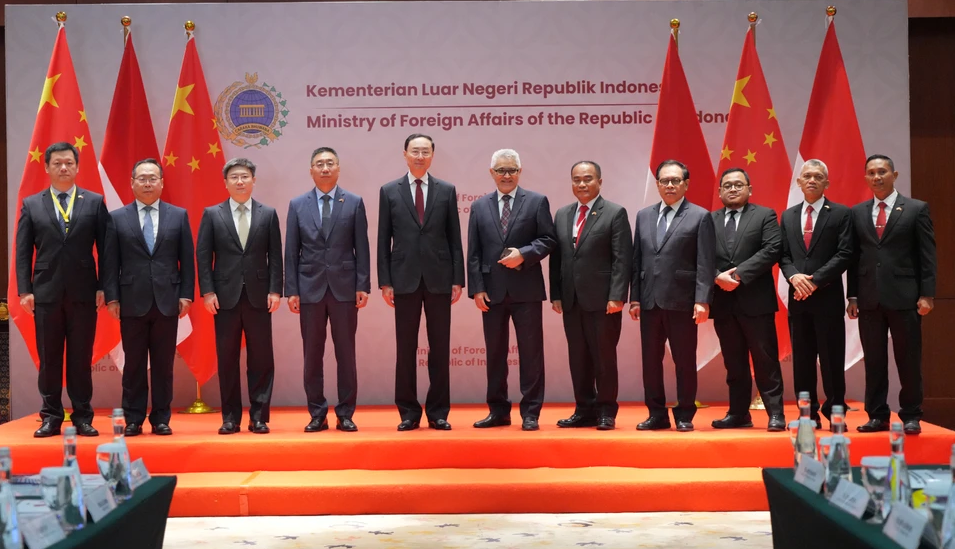

As the trade rivalry between the United States and China deepens, calls are growing for the Indonesian government to adopt a more proactive and balanced approach in engaging both global powers on tariff-related policies. Economists, trade analysts, and regional policy experts are urging Jakarta to position itself as a strategic intermediary protecting national interests while leveraging its role in the evolving Indo-Pacific economic landscape.
The appeal comes as the ripple effects of the US-China tariff standoff continue to disrupt global supply chains, shift trade flows, and put pressure on emerging markets in Southeast Asia. Indonesia, with its growing economy and pivotal regional position, is seen as uniquely placed to navigate and potentially mediate elements of the economic fallout.
“In this increasingly polarized global environment, Indonesia must avoid being drawn into one-sided trade alignments,” said Dr. Rafiq Santoso, an international trade analyst at the Indonesian Centre for Strategic and Global Studies. “Instead, it should act as a bridge engaging in dialogue with both Washington and Beijing to ensure our exports, manufacturing base, and economic stability are not compromised.”
Analysts warn that failure to respond diplomatically could leave Indonesia vulnerable to secondary impacts, including shifting investment patterns, reduced access to critical technology, and new tariffs on key exports like palm oil, rubber, textiles, and electronics.
The Indonesian Chamber of Commerce and Industry (KADIN) has also echoed the need for a balanced and strategic foreign economic policy. “We should not only monitor developments, but actively engage both parties,” said KADIN Deputy Chairwoman Shinta Widjaja Kamdani. “This is an opportunity for Indonesia to position itself as a neutral, reliable partner in a fragmented global economy.”
Trade Ministry officials have so far maintained a cautious stance, emphasizing Indonesia’s commitment to free and fair trade while expressing concern over rising protectionism among major economies.
Observers say that beyond avoiding economic fallout, Indonesia could use its neutral stance to advocate for broader multilateral trade reforms through platforms such as ASEAN, the G20, and the World Trade Organization. With global trade norms increasingly being tested, Indonesia’s ability to manage its relationships with both Washington and Beijing may determine not just its economic trajectory, but its regional influence in the coming decade.
As the tariff battle intensifies between the world’s two largest economies, Indonesia faces a delicate balancing act one that will require diplomatic finesse, economic agility, and a long-term vision for its place in the new global trade order.
source: en.antaranews.com