
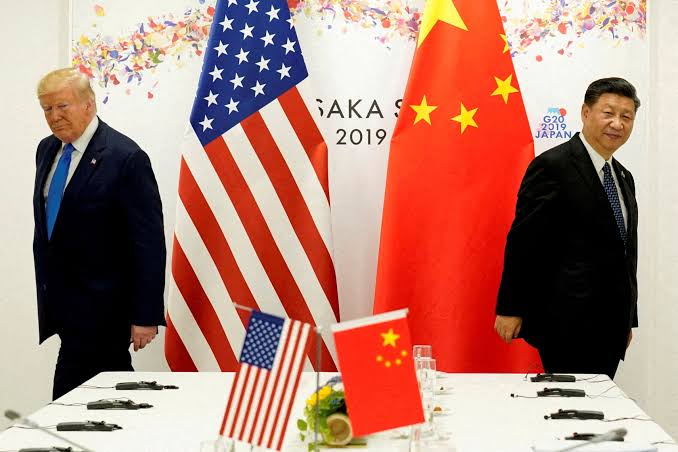

Nearly five years after former President Donald Trump’s administration first floated the idea of “decoupling” the U.S. economy from China, the policy’s real-world legacy remains hotly contested. Recent analysis suggests that what was once framed as a seismic shift in international trade may have been more political theater than actual strategy.
The Trump White House often used combative language toward Beijing, characterizing the U.S.-China economic relationship as dangerously imbalanced. Senior officials warned that American manufacturing was too dependent on China, and floated sweeping measures to bring industry home. But behind the scenes, the decoupling effort now appears more fragmented and reactive than coordinated.
“Decoupling was more of a slogan than a roadmap,” said Dr. Marissa Chen, a senior fellow at the Center for Strategic and International Studies. “The rhetoric was aggressive, but the execution was inconsistent and sometimes contradictory.”
While tariffs were implemented and some tech restrictions imposed, major American corporations continued to invest in Chinese markets. Data from the U.S. Department of Commerce shows that direct investment in China remained relatively stable between 2017 and 2020. Moreover, Chinese imports into the U.S. rebounded quickly even after rounds of tariffs.
Critics argue the Trump team may have been “toying” with the public and markets—using tough talk to score political points while avoiding the deeper, costlier structural changes a real decoupling would have required.
Supporters of the administration’s approach contend that the rhetoric alone had strategic value. “The Trump administration’s framing of China as a strategic competitor changed the conversation in Washington,” said Miles Trent, a former trade adviser. “That shift laid the groundwork for bipartisan policies we see today.”
Indeed, the Biden administration has maintained several Trump-era policies, including tariffs on Chinese goods and tech export controls. Yet it has also taken a more multilateral approach, working with allies to address Beijing’s influence.
As global supply chains recalibrate in the wake of the COVID-19 pandemic and rising geopolitical tensions, decoupling—real or rhetorical—remains a live issue. But the Trump era’s legacy may ultimately be less about what changed economically and more about how Washington now talks about China.
source: issuesinsight.com