
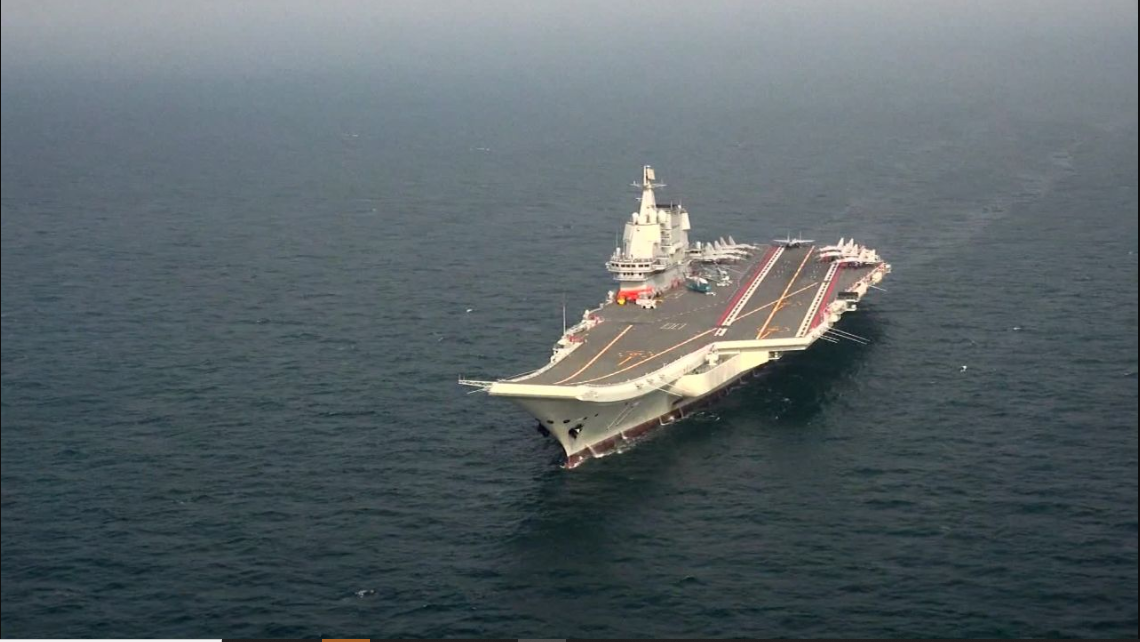

Newly released satellite images and official defense statements confirm that both the United States and China have simultaneously deployed their aircraft carriers to key waters in the Pacific, underscoring rising military tensions and strategic posturing in the region.
The U.S. Navy’s USS Ronald Reagan and USS Carl Vinson were observed conducting joint exercises near Guam, while China’s Type 003 aircraft carrier Fujian was spotted sailing through the South China Sea, flanked by a fleet of destroyers and supply vessels.
Military analysts interpret the parallel deployments as a deliberate show of force by both nations amid ongoing disputes over Taiwan, freedom of navigation, and contested maritime claims in the South and East China Seas.
“The presence of two U.S. supercarriers in the western Pacific is a clear message to Beijing,” said Dr. Alicia Kim, a senior fellow at the Pacific Security Institute. “Meanwhile, China’s deployment of the Fujian its most advanced carrier to date demonstrates its growing naval reach and desire to challenge U.S. dominance in the region.”
Pentagon officials stated that the U.S. exercises are routine and aimed at “ensuring peace and stability through a free and open Indo-Pacific.” China’s Ministry of National Defense countered with a statement calling its carrier activities “normal training operations within sovereign waters.”
Despite reassurances, the parallel naval presence has raised concerns among regional powers, with Japan and the Philippines closely monitoring developments. Diplomats have urged both sides to maintain open lines of communication to avoid miscalculations that could escalate into open conflict.
The Pacific has increasingly become a theater of strategic rivalry, with both the U.S. and China investing heavily in modernizing their naval capabilities. Experts warn that the current deployment could signal a new phase in this geopolitical contest one where naval might plays a central role in shaping the region’s future balance of power.
source: miamiherald.com