
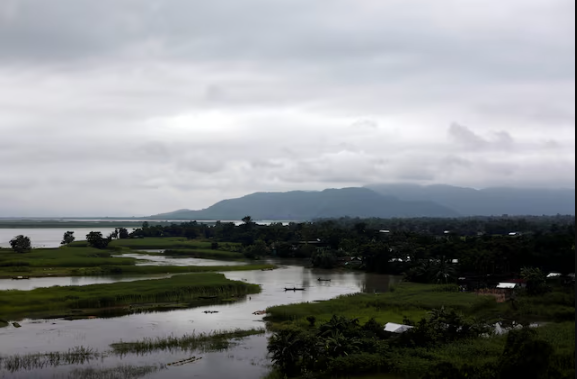

China’s ambitious plan to construct a new mega-dam on the Yarlung Tsangpo River known downstream as the Brahmaputra is drawing growing concern from several of its neighbouring countries. The dam, which Beijing describes as a cornerstone of its green energy strategy, is being built in the highly sensitive and seismically active region of Tibet, near the Indian border, and could become the world’s largest hydroelectric project once completed.
Strategic and Environmental Stakes
The Yarlung Tsangpo originates in Tibet and flows into India and Bangladesh as the Brahmaputra, serving as a critical freshwater source for millions. China’s dam project, part of its 14th Five-Year Plan, is intended to generate over 60 gigawatts of electricity nearly three times the output of the Three Gorges Dam.
But downstream nations particularly India and Bangladesh are raising red flags over the project’s potential to disrupt water flow, impact agriculture, and escalate geopolitical tensions in an already volatile region.
“Water security is a national security issue,” an Indian official told this publication on condition of anonymity. “Unilateral control over transboundary rivers undermines trust and raises the risk of water becoming a weapon.”
Concerns in India and Bangladesh
India, which has faced multiple border standoffs with China in recent years, views the dam as part of a broader strategy by Beijing to exert influence in South Asia. Indian hydrologists warn that the dam could enable China to alter the flow of the Brahmaputra, especially during the dry season, affecting millions in the Indian states of Arunachal Pradesh and Assam.
Bangladesh, further downstream, fears the dam could reduce freshwater flow into the Ganges Delta, worsening salinity intrusion in coastal areas and impacting food production and fisheries. Officials in Dhaka are calling for regional water-sharing agreements and greater transparency from Beijing.
“We need basin-wide cooperation, not unilateral moves,” said Dr. Mizan Rahman, a water policy expert based in Dhaka. “China must share environmental impact data and include all stakeholders in river management.”
China’s Response and Strategic Calculations
Beijing insists that the project is environmentally sound and will not harm downstream nations. Chinese officials maintain that the dam is a non-consumptive project meaning it will generate power without diverting water and argue that fears are being stoked by geopolitical rivalries rather than facts.
“China has always respected the rights of downstream countries,” said a spokesperson for China’s Ministry of Water Resources. “This project is a contribution to global climate goals.”
However, analysts say the dam is as much about energy as it is about leverage. “Control over the Brahmaputra offers Beijing a powerful strategic tool,” said Dr. Lobsang Tsering, a Tibetan researcher and political analyst. “It gives China a say in South Asia’s water future.”
Call for Dialogue and Transparency
Regional experts and international bodies are urging China to engage in multilateral dialogue to mitigate tensions and ensure that development is sustainable and equitable.
“The dam could deepen mistrust in a region already fraught with geopolitical tension,” said Brahma Chellaney, a strategic affairs expert in New Delhi. “It’s crucial for China to demonstrate good faith by cooperating with its neighbours on shared water resources.”
As construction progresses, the mega-dam has become more than just an engineering marvel it’s a litmus test for regional cooperation in an era of rising environmental stress and geopolitical rivalry.