
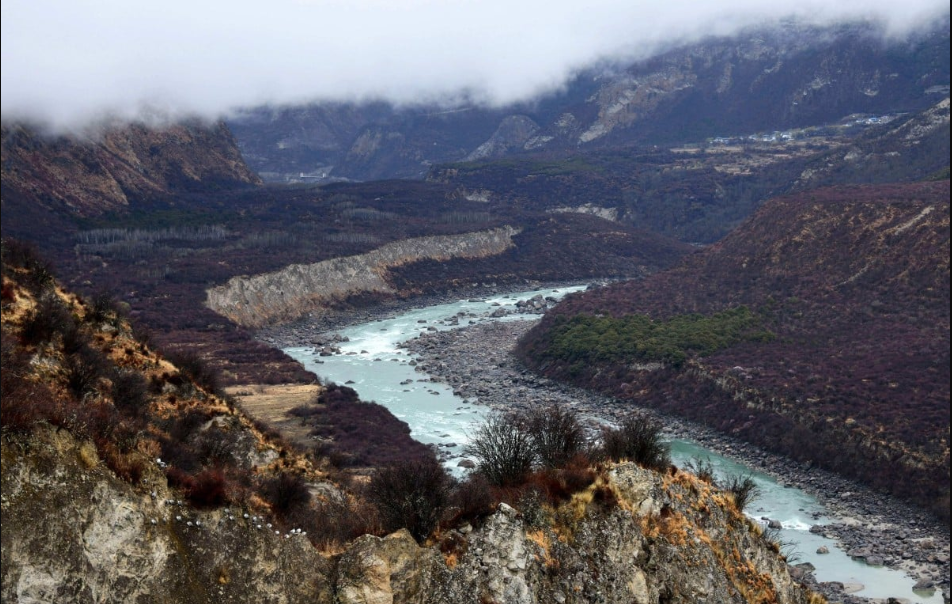

1. A Shared River, Rising Stakes
- The Yarlung Tsangpo originates in Tibet, flowing into India as the Brahmaputra, where it becomes a critical water resource for agriculture, energy, and millions of people across northeastern India and Bangladesh.
- Historically, China has constructed dozens of upstream dams on the Tsangpo, prompting ongoing fears of water flow disruption or withholding during dry seasons.
2. Hydrological Uncertainty & Lack of Transparency
- India lacks a formal river‑sharing treaty with China akin to what China has with Southeast Asian neighbors.
- Without mandatory data sharing on water release schedules or reservoir operations, Indian authorities and experts express concern over potential downstream flooding during high discharge or dry-season scarcity.
3. Downstream Impact Risks
- Large dams can modulate river flow sometimes unpredictably raising fears about:
- Erratic seasonal flows, impacting irrigation and hydropower downstream.
- Flash flood releases that could devastate floodplains and settlements in northeastern states.
4. Strategic and Security Dimensions
- The proposed dam would be in close proximity to the Sino-Indian border, placing the project within a region sensitive to territorial and military tensions.
- Control of upstream river infrastructure could become a leverage point in broader geopolitical relations, especially amid unresolved border disputes.
5. Environmental and Social Consequences
- The Tibetan Plateau is ecologically fragile. Massive infrastructure projects there could trigger:
- Landslides or dam-induced seismic risks, threatening downstream populations.
- Ecosystem disruption as key Himalayan biodiversity areas are affected, with downstream knock-on effects on fisheries and floodplain ecology.
6. Precedents & Regional Anxiety
- Past incidents such as reported sudden releases from Chinese reservoirs have heightened anxieties in India, even when no official harm occurred.
- Bangladesh, too, frequently joins India in requesting hydrological data sharing, fearing agricultural and flood risks linked to Brahmaputra management.
Summary Table
| Concern Area | Why India Is Likely to Worry |
|---|---|
| Water Security | Unregulated or sudden changes in flow could harm agriculture, power generation, livelihoods |
| Lack of Legal Framework | No binding treaty requires China to share hydrological data or coordinate releases |
| Strategic Leverage | Control over headwaters offers China potential influence during border tensions |
| Environmental Risk | Dam operations may trigger ecological harm, seismic incidents, or landslides |
| Precedent Experience | Past unexplained upstream dam releases have fueled trust issues and emergency responses |
Looking Ahead
Should China proceed with the construction of the mega-dam, India is expected to:
- Demand formalization of data-sharing agreements, possibly under bilateral expert-level mechanisms.
- Press for environmental and hydrological impact assessments, ideally conducted jointly or verified by third-party observers.
- Monitor reservoir inflows and releases in real time, using satellite imagery and regional sensors to gauge water flow changes.
Even in the absence of publicly available statements specific to this new dam, India’s concern grounded in historical patterns and hydropolitical precedent is clear: such a monumental upstream project over the headwaters of the Brahmaputra could seriously affect downstream water access, seasonal flows, and regional stability.