
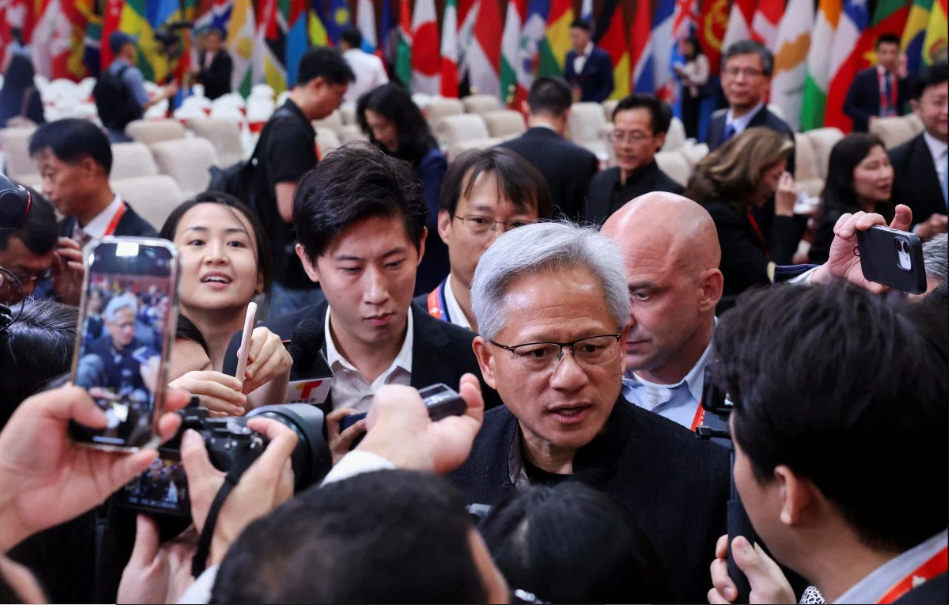

A group of bipartisan lawmakers known as “China hawks” sharply criticized the U.S. Commerce Department’s decision to allow Nvidia and AMD to restart sales of their AI processors specifically Nvidia’s H20 and AMD’s MI308 chips to Chinese entities. The reversal comes after a ban imposed in April by the Trump administration, citing national security concerns
Lawmakers’ Concerns
Representative John Moolenaar (R‑Mich.), chair of the House Select Committee on China, led the opposition. In a letter to Commerce Secretary Howard Lutnick, Moolenaar warned that allowing H20 sales—even though the chip is technically “less powerful” than Nvidia’s top-tier offerings could still give China a strategic advantage in AI development, including potential military applications. He has demanded a briefing from the department by August 8, 2025, detailing the process and reasoning behind the licensing decisions, oversight plans, and future policy directions
Other lawmakers joined in expressing bipartisan concern. Although some legislators support reworking export rules rather than reinstating outright bans, many assert the current approvals fail to account for how even downgraded chips can significantly outperform China’s domestic AI hardware.
A Calculated Reversal
The Commerce Department’s stance shifted after a lobbying campaign led by Nvidia CEO Jensen Huang, who engaged directly with President Trump and other senior officials. Nvidia received assurances that license applications for H20 chip exports would be approved, and the company announced plans to resume shipments to China once permits are granted
While the H20 is intentionally calibrated to comply with export controls, its performance remains substantially ahead of China’s currently mass-producible chips raising concerns it could accelerate Beijing’s AI ambitions, including defense-related applications.
Strategic and Economic Trade-Offs
The reversal comes amid broader trade negotiations in which the U.S. secured commitments from China to ease rare-earth mineral export restrictions. The agreement also included concessions by Washington on chip design tools and related technologies
Industry analysts argue that lifting the H20 ban protects U.S. firms’ access to China a market projected to be worth tens of billions in AI demand. Nvidia’s share price rose ~4% immediately following the news, while AMD, which likewise plans MI308 shipments once licenses are issued, saw its stock climb ~5–8%
But national security advocates counter that economic gains may come at the cost of eroding America’s technology leadership. They warn the decision may empower Chinese AI platforms such as Tencent, Alibaba, and others to train advanced models using U.S.-origin hardware beyond what Beijing could produce domestically.
Production Realities
Despite the policy shift, reaching full-scale H20 exports may take time. After the April ban, Nvidia canceled production orders with TSMC. Restarting fabrication could require up to nine months, potentially delaying China deliveries significantly.
What’s Next
Commerce Secretary Lutnick is expected to respond to Moolenaar’s August 8 briefing request with licensing and oversight plans.
Congressional debate is likely over whether to endorse a dynamic export standard, which would align permissible exports with the pace of China’s domestic chip improvements, rather than static performance thresholds set by U.S. benchmarks
Further lobbying could follow as Nvidia’s CEO signals interest in exporting more advanced chips to China over time under updated compliance models.
Bottom Line
The U.S. decision to allow H20 chip licenses to China reflects a complex balancing act: safeguarding economic interests and preserving tech market access while trying to contain China’s AI ambitions. But Capitol Hill hawks warn it may unleash unintended strategic consequences and demand tighter regulatory guardrails.