

U.S. Central Command (CENTCOM) announced on Thursday that it has killed a senior Islamic State (ISIS) operative in a targeted strike in Syria’s Aleppo province, dealing a significant blow to the terror group’s remaining leadership in the region.
In a statement released early Friday morning, CENTCOM confirmed that a precision drone strike on July 24 eliminated Usamah al-Muhajir, described by U.S. officials as a high-ranking ISIS facilitator involved in the planning of regional and international terrorist operations.
“Al-Muhajir’s death degrades ISIS’s ability to coordinate external attacks and maintain its network across Syria and beyond,” the statement read. “CENTCOM remains committed to the enduring defeat of ISIS and will continue to take all necessary measures to protect the homeland and our allies.”
The operation was carried out in northern Aleppo, an area where ISIS remnants and other extremist groups continue to operate amid the complex patchwork of rebel, regime, and Kurdish-controlled territories. According to CENTCOM, no civilians were harmed in the strike, though independent verification of that claim remains pending.
Local sources in Aleppo reported hearing drones overhead and an explosion late Thursday evening near the town of al-Bab, a known hotspot for militant activity. Syrian opposition monitoring groups later confirmed the death of at least one individual with links to ISIS but have not yet independently identified the target.
Al-Muhajir is believed to have played a key logistical role in reviving ISIS cells across Syria and Iraq after the group lost its territorial “caliphate” in 2019. U.S. intelligence officials say he was involved in financing, recruitment, and coordination of sleeper cells, with ties extending to networks in Europe and Central Asia.
This is the latest in a series of targeted U.S. strikes against ISIS operatives in Syria this year. In March, CENTCOM announced the killing of another senior leader in Deir ez-Zor, and last month, a joint operation with Kurdish-led forces led to the capture of several mid-level commanders.
While the Islamic State no longer holds significant territory, analysts warn that it remains a persistent and adaptive threat.
“Leadership decapitation doesn’t eliminate ISIS, but it disrupts their ability to plan and inspire attacks,” said Jennifer Cafarella, a senior fellow at the Institute for the Study of War. “Operations like these are critical to keeping the pressure on.”
CENTCOM emphasized that the strike was conducted under its mandate to target ISIS threats in the region and did not involve coordination with Syrian regime forces or Russian military units operating nearby.
As of now, neither the Syrian government nor Russia has issued an official response.
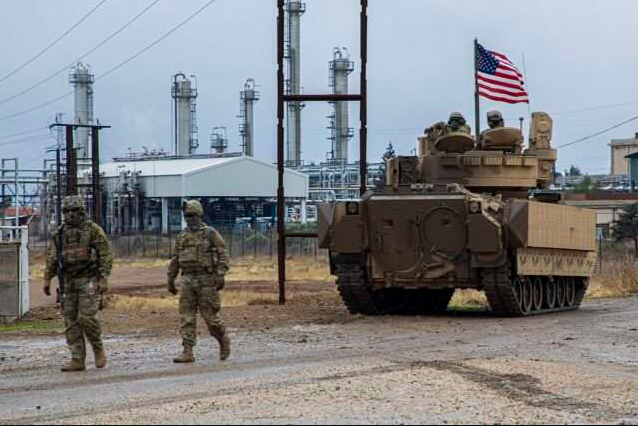
U.S. forces maintain a limited presence in eastern Syria, supporting the Syrian Democratic Forces (SDF) in counterterrorism efforts. Officials say those missions will continue despite increasing regional volatility and growing pressure to wind down American military involvement in the Middle East.