
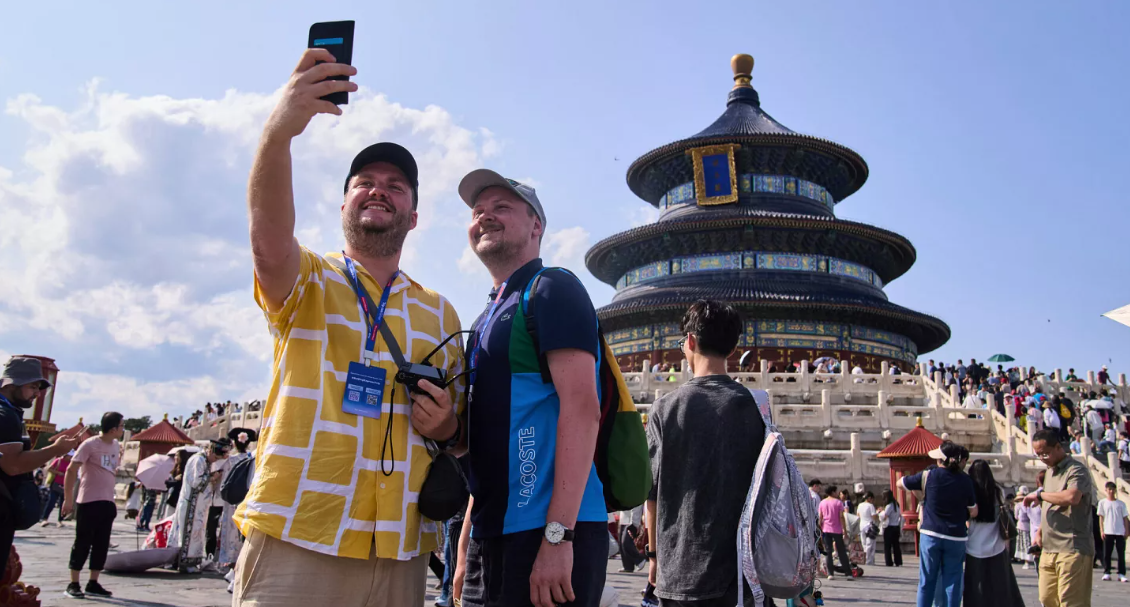

In a move aimed at strengthening bilateral relations and boosting tourism, China has announced a new trial visa-free policy for Russian citizens. The measure, which will allow ordinary passport holders to visit China for up to 30 days without a visa, is set to go into effect on September 15, 2025.
The announcement was made by Chinese Foreign Ministry spokesman Guo Jiakun at a regular press briefing. The policy will be in place for a one-year trial period, concluding on September 14, 2026. According to Guo, the new rules apply to Russians traveling for business, tourism, family visits, exchanges, or transit, and are a testament to the “high level” of China-Russia relations.
This development follows closely on the heels of a meeting between Chinese President Xi Jinping and Russian President Vladimir Putin in Beijing. The two leaders praised their growing partnership, which they described as a “bulwark against the West.” Analysts view the visa policy as a practical step to reinforce the strategic and economic alignment between the two nations, providing a tangible benefit to their citizens.
The Russian tourism industry has welcomed the news with great enthusiasm. The Russian Union of Travel Industry (RST) and the Association of Tour Operators of Russia have both stated that the new policy could lead to a significant increase in tourist numbers, with some predicting a surge of 30 to 40 percent. This aligns with China’s broader strategy to revive its inbound tourism sector, which has been making a concerted effort to attract foreign visitors.
The new visa-free policy is part of a larger trend by Beijing to simplify entry for citizens of numerous countries. Since lifting pandemic-era restrictions, China has expanded its visa-free list to include a growing number of nations from Europe, Latin America, and the Middle East, demonstrating a clear commitment to facilitating global exchanges and boosting its domestic economy through tourism. As the trial period begins, both countries will be looking to capitalize on the increased flow of travelers and deepen their people-to-people connections.