

Rivian plans to incorporate a lidar sensor into its new R2 crossover later this year, a move that highlights the growing importance of lidar technology in the automotive industry. Lidar, which stands for Light Detection and Ranging, uses laser light to map surroundings in high resolution, enabling advanced driver-assistance systems (ADAS) and, eventually, fully autonomous driving. Rivian has called its lidar-equipped system a step toward “superhuman” autonomy, promising capabilities beyond human perception.
The journey of lidar from an expensive novelty to a more accessible mass-market technology owes much to Chinese manufacturers. In the 2010s, lidar was mostly associated with companies like Waymo, which famously mounted large spinning sensors costing around $50,000 on Jaguar robotaxis in San Francisco. These systems were technologically impressive but prohibitively expensive for mainstream vehicles. Waymo’s sensors, with their distinctive rotating domes, became a symbol of high-end autonomy but remained largely out of reach for mass-market automakers.
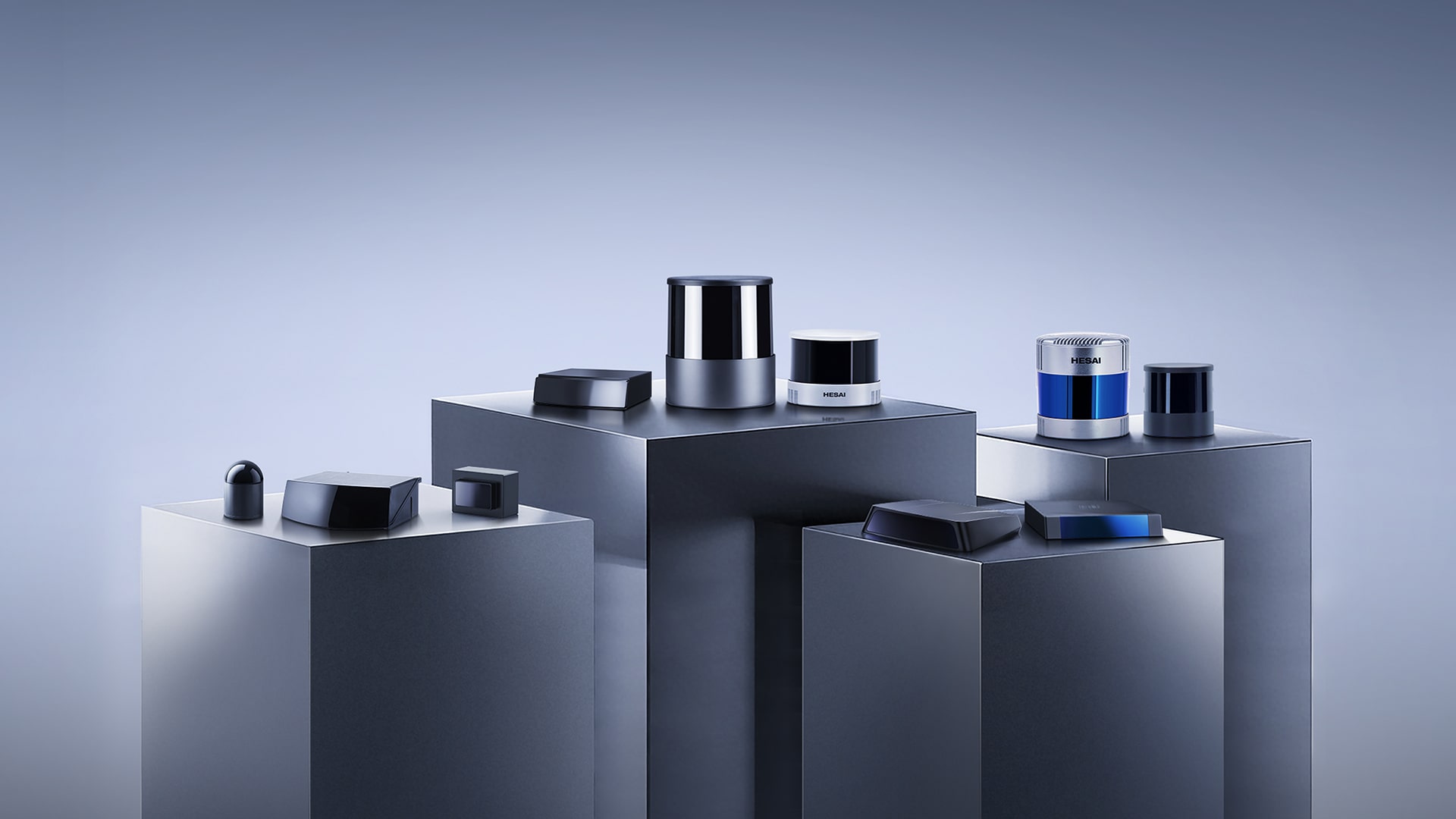
China changed this landscape by aggressively investing in lidar production and innovation. Chinese companies optimized manufacturing processes, reduced component costs, and leveraged high-volume production to bring prices down dramatically. Some sensors that once cost tens of thousands of dollars can now be manufactured for under $1,000, making them feasible for integration into regular consumer vehicles. This price shift has opened the door for automakers globally to explore lidar adoption not just for experimental prototypes but for commercial models.
Several U.S. automakers, including Rivian, are now embracing this technology, recognizing that lidar can significantly improve safety and enable semi-autonomous features that radar and cameras alone cannot achieve. Unlike radar, which struggles with object shape and size, or cameras, which can be limited by lighting conditions, lidar creates precise 3D maps of the vehicle’s surroundings in real time. This capability allows vehicles to better detect pedestrians, cyclists, and other obstacles, particularly in complex urban environments or adverse weather conditions.
Industry analysts note that integrating lidar into mainstream vehicles could accelerate the adoption of autonomous driving by providing a more reliable sensory foundation. By combining lidar with radar, cameras, and advanced AI software, automakers aim to create systems capable of anticipating and reacting to hazards faster than human drivers. Rivian’s upcoming R2 crossover is among the first to benefit from this trend, signaling a shift in the U.S. market where traditional hesitation over lidar costs and complexity is gradually giving way to broader acceptance.
However, challenges remain. Lidar sensors are still bulkier than cameras or radar units, require careful calibration, and raise questions about cost-benefit trade-offs for mid-market vehicles. Nevertheless, Chinese manufacturers continue to innovate, producing smaller, more energy-efficient lidar units while further lowering costs. As a result, automakers worldwide are increasingly willing to consider lidar as a standard component for next-generation ADAS systems.
In sum, China’s push to make lidar mass-producible and affordable has reshaped the global automotive landscape, creating new opportunities for U.S. automakers and other manufacturers to adopt the technology. For companies like Rivian, it represents a crucial step toward vehicles that can operate more safely, intelligently, and autonomously — bringing the promise of “superhuman” driving within reach for ordinary consumers.