
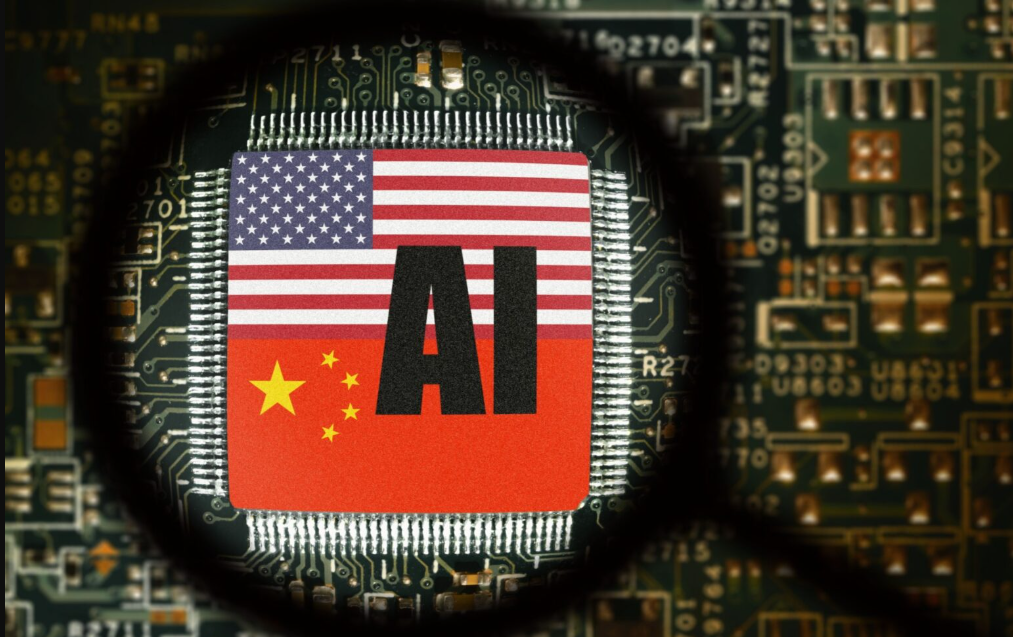

As the race for artificial intelligence supremacy intensifies between the United States and China, experts warn that the competition is no longer solely about technological innovation it’s increasingly about who controls the flow of global information in the digital age.
Both nations have poured billions into AI research and development, with breakthroughs in machine learning, natural language processing, and autonomous systems. But beyond the headlines of faster processors and smarter algorithms lies a deeper, more strategic contest: the ability to shape public opinion, surveil populations, and dictate the digital norms of the 21st century.
“The U.S.-China AI rivalry is about controlling the architecture of knowledge,” said Dr. Evelyn Rios, a senior fellow at the Atlantic Council’s Digital Strategy Institute. “Whichever country leads in AI will not just dominate the tech sector they’ll influence how truth is constructed and consumed.”
In China, AI tools have been deeply integrated into state-run surveillance systems and content moderation platforms, enabling real-time tracking of citizens and tight control over online discourse. The Chinese government has also exported its AI surveillance infrastructure to other countries, raising concerns about a growing “digital authoritarianism.”
Conversely, the U.S. approach, while anchored in private sector innovation, is not without scrutiny. American tech firms wield massive influence over the global flow of information through platforms like Google, Meta, and OpenAI raising ethical questions around data privacy, algorithmic bias, and corporate control of information.
Amid this tug-of-war, the stakes are rising. The two countries are also competing to set international AI standards through diplomatic influence at the United Nations, G7, and emerging AI safety alliances. While the U.S. promotes an “open and ethical” AI framework, China has advocated for sovereignty-centric approaches that prioritize national control over data.
“There’s a narrative battle playing out alongside the technical one,” noted Kai Wu, a Beijing-based technology policy analyst. “It’s about whose model the world follows Silicon Valley’s capitalist AI or China’s state-directed AI.”
With generative AI tools like large language models entering mainstream use, the implications for information control are profound. These systems are not only capable of generating text, images, and video but also of subtly shaping the narratives users are exposed to a feature with vast potential for both enlightenment and manipulation.
As both nations ramp up investment and tighten their regulatory frameworks, the AI race is increasingly seen as a contest for digital sovereignty where the real prize is not just economic advantage, but global influence over ideas, speech, and truth itself.
source: reaction.life