
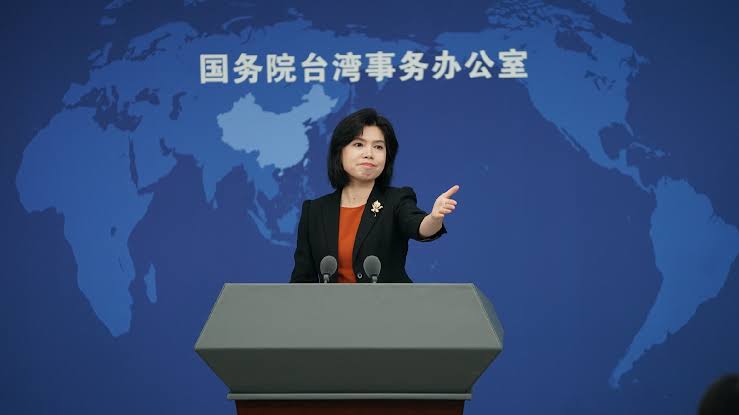

The Chinese mainland has issued a sharp rebuke to Taiwan’s ruling Democratic Progressive Party (DPP), accusing it of sacrificing the island’s long-term interests in exchange for deepening ties with the United States.
In a statement released Tuesday, a spokesperson for the Taiwan Affairs Office of the State Council criticized what it called the DPP’s “reckless political maneuvering” and claimed that recent moves by Taipei to strengthen military and economic cooperation with Washington amounted to “selling out the interests of the people of Taiwan.”
“The DPP authorities continue to escalate cross-Strait tensions by colluding with foreign powers,” the spokesperson said. “Their actions not only jeopardize peace and stability in the region but also betray the aspirations of the majority of Taiwanese people who desire peace, stability, and prosperity.”
The condemnation follows a series of high-level exchanges between Taiwanese and U.S. officials, including recent arms agreements and strategic dialogues seen by Beijing as provocative and a violation of the “One China” principle.
Taiwan’s Mainland Affairs Council responded by defending its policies, stating that engagement with the international community, including the United States, is vital for the island’s security and democratic development. The Council reiterated that Taiwan would not be intimidated by political pressure or threats from Beijing.
Analysts say the sharp rhetoric underscores rising tensions in the Taiwan Strait, where Beijing has stepped up military drills and diplomatic pressure in response to what it perceives as growing support for Taiwan’s de facto independence.
The United States, while maintaining its One China policy, continues to provide arms and political support to Taiwan under the Taiwan Relations Act, which obligates Washington to help the island defend itself.
As Taiwan prepares for a leadership transition following recent elections, observers warn that cross-Strait relations may face further turbulence depending on the policies of the incoming administration.
source: english.news.cn